Reviews 4 min read
Brother 1034D vs Juki MO-654DE: The Serger Decision Guide
The Brother 1034D is discontinued. The Juki MO-654DE runs at $549-649 new. How they compare on threading, speed, build quality, thread configs, and long-term value.
The Brother 1034D is discontinued. Brother lists it as out of stock as of June 2026. The Juki MO-654DE is a current-production machine available at authorized dealers for $549 to $649 (verified June 2026 at Quality Sewing and Premier Stitching, against Juki’s MSRP of $1,399). For new buyers, this is not a live comparison between two available machines. For buyers shopping used, this page covers what the machines actually differ on.
Specs side by side
| Spec | Brother 1034D | Juki MO-654DE |
|---|---|---|
| Thread configurations | 3 or 4 thread | 2, 3, or 4 thread |
| Max speed | 1,300 spm | 1,500 spm |
| Differential feed range | 0.7:1 to 2.0:1 | 0.7:1 to 2.0:1 |
| Stitch width | 3mm to 7mm | 6mm (left) / 4mm (right) |
| Stitch length | Standard | Standard + rolled hem |
| Weight | ~13 lbs | 15.5 lbs |
| Accessory feet | 3 | Included kit |
| Status | Discontinued | Current production |
| Street price | Used / variable | $549 to $649 new |
Specs verified against Brother USA and Jukihome.com product documentation, June 2026.
The thread configuration difference
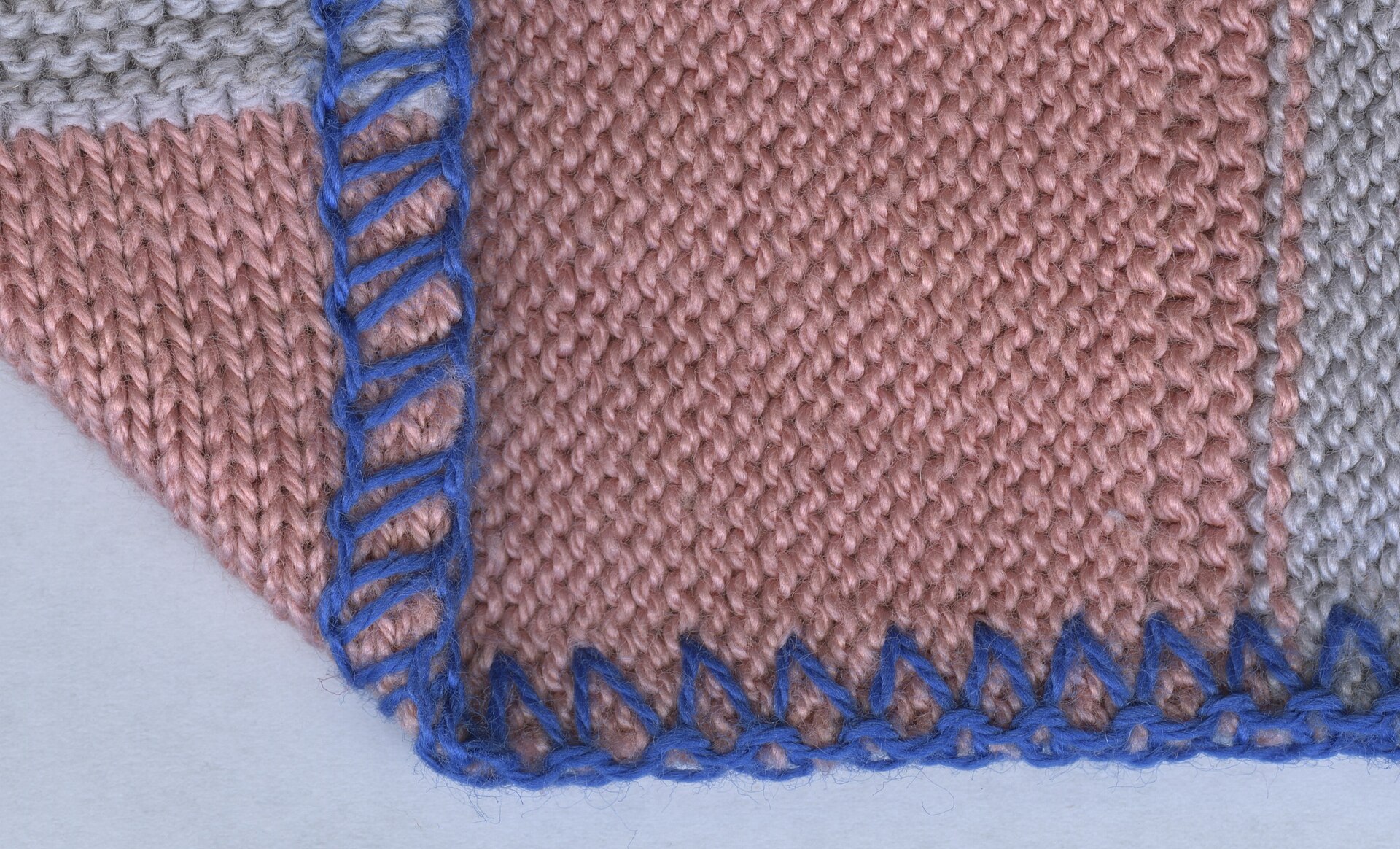
The Juki MO-654DE runs in 2, 3, or 4 thread configurations. The 2-thread mode is primarily used for lightweight rolled hem finishing, where fewer threads produce a finer, flatter hem edge. The 3-thread configuration handles standard edge finishing and seaming. The 4-thread provides the strongest seam for high-stress fabric applications.
The Brother 1034D runs in 3 or 4 thread only. It does not support 2-thread mode. For sewists who do a lot of delicate fabric finishing (chiffon, organza, fine knits with rolled hems), the Juki’s 2-thread option is a practical advantage. For sewists who work primarily on medium and heavier fabrics, the 3-thread difference rarely matters in day-to-day use.
Speed: 200 spm more on the Juki
The MO-654DE runs at 1,500 spm. The 1034D ran at 1,300 spm. In practical terms:
- At 1,300 spm, a standard 20-inch side seam takes roughly 1 second at full speed (with acceleration and deceleration, closer to 3 to 4 seconds in real use).
- At 1,500 spm, the same seam runs about 15% faster.
For home sewing volumes (finishing seams on a garment at a time), the 200 spm difference is perceptible but not decisive. For sewists doing production-level home garment construction, the speed advantage compounds across a session. The Juki’s faster maximum is one of the inherited traits from Juki’s industrial machine background.
Build quality and the Juki industrial heritage
Juki manufactures industrial sewing machines for garment factories. Their Pearl Line home sergers are not the same machine, but the engineering culture carries over in construction quality. The MO-654DE’s 15.5 lb body is heavier than the 1034D, and owner communities consistently describe the Juki as maintaining its settings, threading cleanly after years of use, and not requiring recalibration on every thread change.
The 1034D was well-regarded in its class for the price at which it sold. Owner reports on longevity were generally positive for what was an entry-tier machine. The Juki, however, consistently rates above the 1034D on long-term durability in sewing community discussions, which is consistent with the manufacturing background behind it.
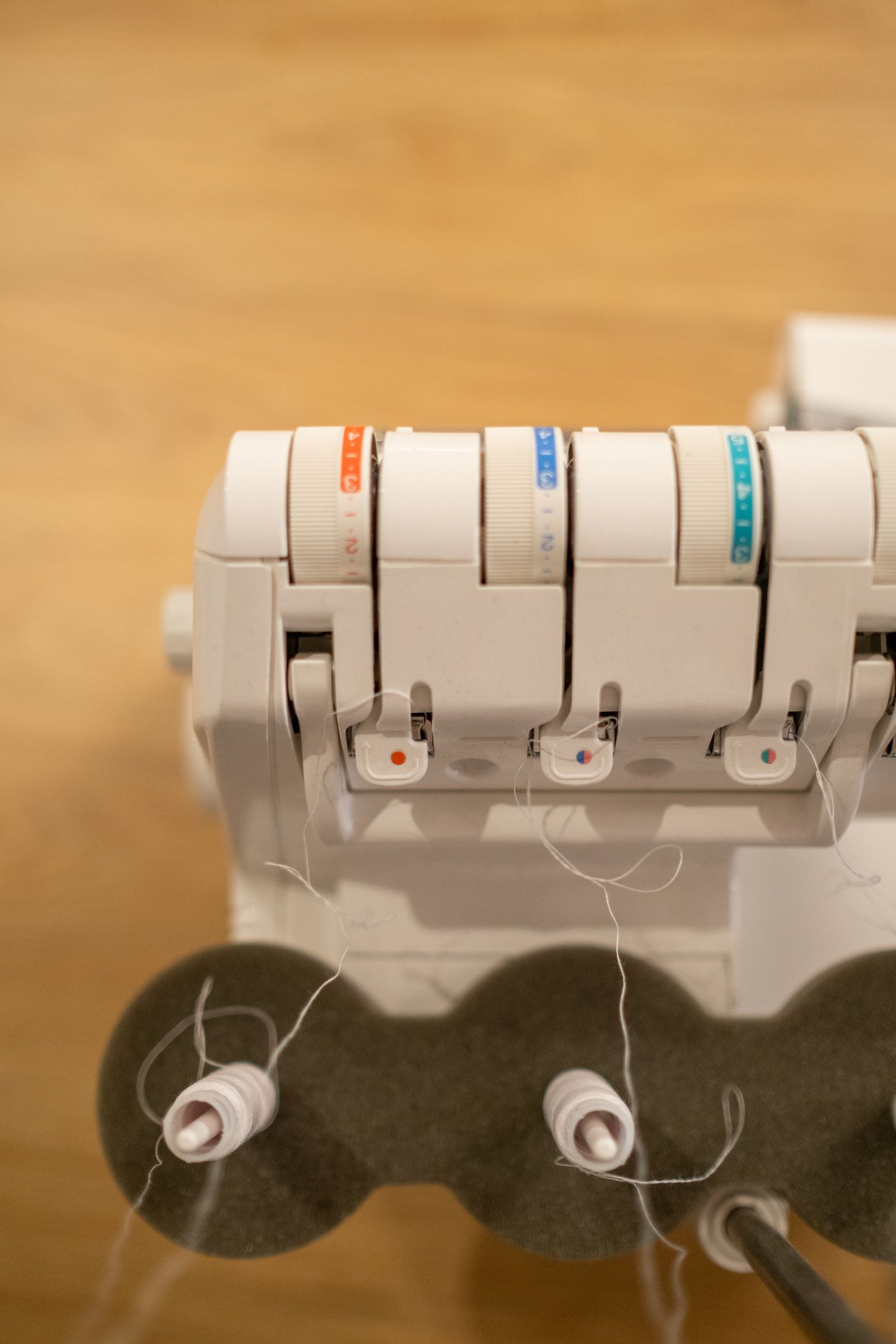
Threading habits split along similar lines. Both machines lean on the same basic system, color-coded diagrams printed right on the machine body, guiding thread through the tension discs and loopers in sequence. Owner communities describe the Juki’s threading as slightly more forgiving for beginners, with cleaner access to the looper area. The 1034D’s threading isn’t unusual for an entry serger of its generation; it just doesn’t get the same “easier” reputation the Juki does. Neither machine threads itself, and both ask for the same 3-to-4-path routing regardless of brand.
What to do if you find a used 1034D
The 1034D was sold in large numbers over many years. Used units show up frequently on resale platforms. If you find one in working condition:
- Test all thread tensions before buying if possible. A machine with a damaged tension disc will frustrate every sewing session.
- A 1034D priced significantly below the MO-654DE’s $549 floor can still be a good value for the same 3/4 thread overlock work.
- A used 1034D priced at $400 or above is competing with a new ST4031HD at $429.99 (Brother’s current replacement) and close to the MO-654DE street price. At that proximity, the new machine wins on warranty and known condition.
The Brother 1034D review covers the machine’s threading, owner reports, and the ST4031HD as the current Brother alternative. The Juki MO-654DE review covers the Pearl Line build quality, dealer pricing, and the step-up MO-735 for buyers who also want coverstitch.