Reviews 12 min read
Handi Quilter Amara Review: Price, Specs, Owner Reports
Handi Quilter Amara pricing ($12,995-$17,495), the 20 vs 24 throat difference, key features, and what owners report after buying this mid-tier longarm.
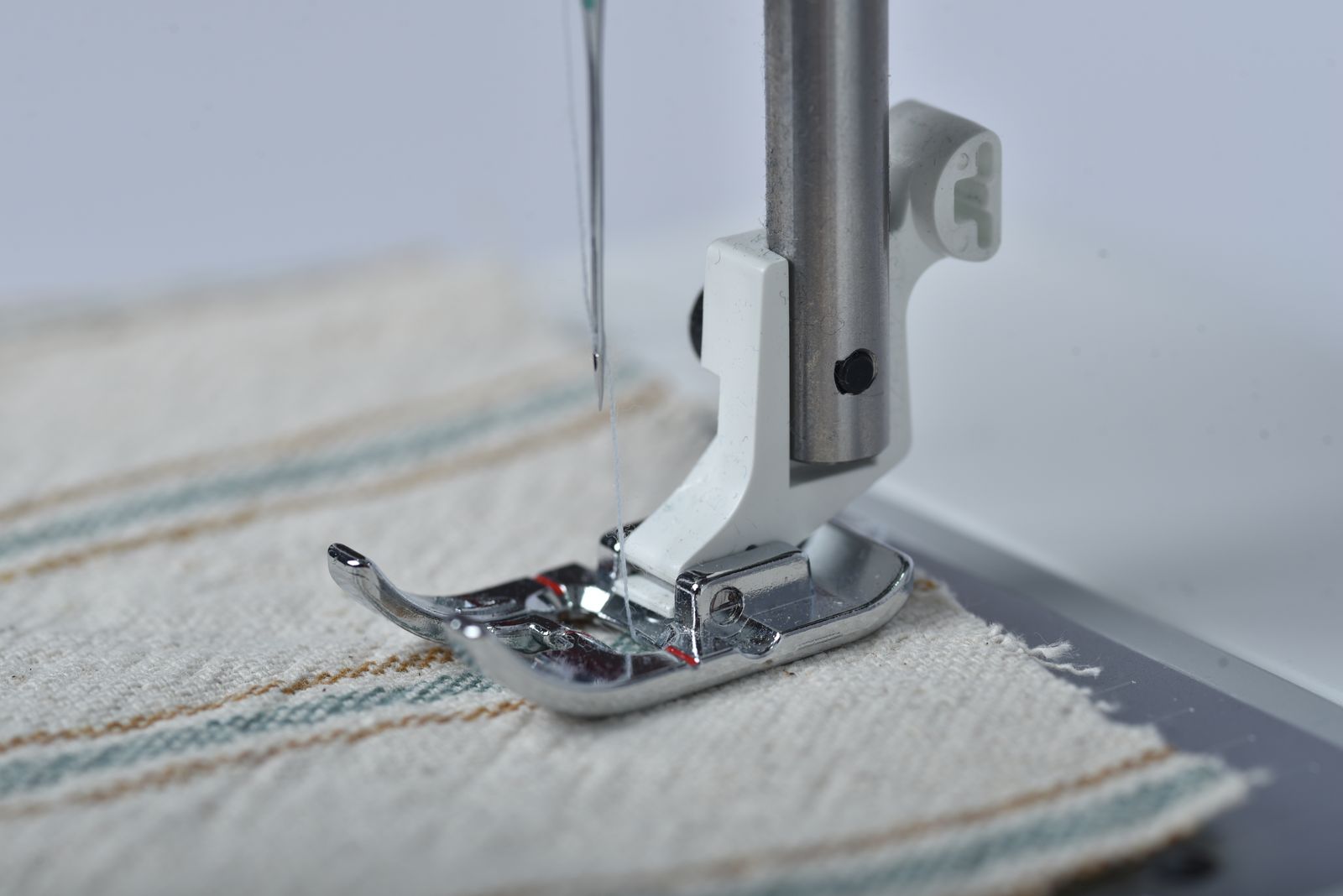
The Handi Quilter Amara is a mid-tier longarm quilting machine, priced from $12,995 for the 20 inch throat model to $17,495 for the 24 inch model at authorized dealers (verified July 2026). It sits above Handi Quilter’s own entry-level Moxie line and well below computerized systems like Innova, built for quilters ready to commit to a dedicated frame machine.
Handi Quilter’s own site returned an access error on every page checked for this review, so pricing and specs below come from authorized dealer pages (Village Sewing, primarily) cross-referenced against two independent owner reviews and several quilting-forum threads. Where a claim comes from an owner rather than the manufacturer, it is labeled that way.
Handi Quilter Amara specs at a glance
| Spec | Amara 20 | Amara 24 |
|---|---|---|
| Throat space | 20” | 24” |
| Max stitching speed | 2,500 spm | 2,500 spm |
| Stitch length range | 4 to 24 stitches per inch | 4 to 24 stitches per inch |
| Screen | 7” color touchscreen | 7” color touchscreen |
| Stitch regulation | Precision and Cruise modes | Precision and Cruise modes |
| Bobbin system | High-speed rotary hook, M-class bobbin | High-speed rotary hook, M-class bobbin |
| Needle guidance | Pinpoint Needle Laser | Pinpoint Needle Laser |
| Frame included | Little Foot (5’) or Studio3 (10’ or 12’) | Gallery2 (10’ or 12’) |
| Price (verified July 2026) | $12,995 | $17,495 |
Specs sourced from Village Sewing’s authorized dealer pages, verified July 2026. Handi Quilter’s own product pages were inaccessible at the time of writing.
Where the Amara sits in Handi Quilter’s own lineup
Handi Quilter sells four tiers under one roof, and the Amara is deliberately the middle one. The Moxie starts at $4,495 with a 15 inch throat, the entry point for a quilter moving off a domestic machine and onto a frame for the first time. The Amara ST, a sit-down version with the same electronics in a different body style, runs $7,595 to $8,495. The Amara 20 and 24 pick up from there at $12,995 and $17,495. At the top, the HQ Infinity 28 starts at $34,495 and adds a 28 inch throat built around Handi Quilter’s most automation-ready platform.
That positioning matters for anyone comparing the Amara to a different brand’s lineup rather than Handi Quilter’s own. The Amara is not the company’s flagship and not its budget option. It is the machine Handi Quilter builds for a quilter who has outgrown a domestic machine’s throat space and wants a frame machine with real stitch-regulation electronics, without stepping into the $20,000-plus computerized-guidance tier.
How much does the Handi Quilter Amara cost?
$12,995 for the Amara 20, $17,495 for the Amara 24, both verified against Village Sewing’s dealer pages in July 2026. Those are base machine-and-frame prices, not the number most buyers end up paying.
A few things move the final total:
Frame length. Village Sewing lists the Amara 20 at one price across the 5 foot Little Foot Frame and the 10 or 12 foot Studio3 Frame options shown on its product page. Other dealers have historically priced longer frames higher, so confirm the exact frame length included before assuming the sticker price covers a 12 foot setup.
Pro-Stitcher. The Amara’s 7 inch touchscreen is Pro-Stitcher compatible, but Pro-Stitcher itself (the computerized pattern and design system) is an add-on, not standard equipment. One dealer listing for the Amara 24 with Pro-Stitcher Premium and Pro-Stitcher Designer bundled in priced the full system near $27,990, roughly $10,500 over the bare Amara 24. Buyers set on computerized quilting from day one should price the bundle, not just the machine.
MSRP versus dealer pricing. Some Handi Quilter dealers list the Amara at MSRP and note directly on the page that they will beat it if contacted, a pattern common across longarm retail. Treat any single dealer’s listed price as a ceiling to negotiate from, not a fixed number.
The Amara 24 naming shift. One dealer’s Amara 24 product page URL and detail copy both refer to the machine as the “HQ Forte,” while the page title still says Amara 24. Handi Quilter appears to be transitioning the 24 inch model to the Forte name, a common pattern when a manufacturer refreshes a model without a full spec change. The Amara 20 shows no equivalent naming shift as of this writing. Buyers researching “Amara 24” and “Forte 24” listings side by side are very likely looking at the same current-production machine.
Amara 20 vs Amara 24: what’s the difference?
Throat space, and functionally, not much else. Both machines run the same 2,500 spm top speed, the same 7 inch touchscreen, the same Precision and Cruise stitch regulation, and the same Pinpoint Needle Laser. The 20 measures 20 inches from the needle to the machine body; the 24 measures 24 inches. That extra 4 inches changes how much of a quilt fits under the needle in a single pass before the quilt has to be rolled forward.
Quilters who have used both report a practical ceiling around 20 inches for hand-guided free-motion work, since arm reach limits how much of the larger throat actually gets used without stepping side to side. The 24 inch throat earns its keep on computerized (Pro-Stitcher) designs and on large-block or panel quilting where fewer rolls per quilt means fewer chances for the roll seams to show. The Amara 20 runs on the Little Foot or Studio3 frame; the Amara 24 requires the larger Gallery2 frame, which is part of why it costs $4,500 more.
Practically: if most projects are twin-size and smaller and the work is hand-guided, the 20 covers it with $4,500 left over for accessories or Pro-Stitcher. If the plan includes queen and king quilts, computerized patterns, or a small quilting business taking in customer work, the 24’s larger pass area starts paying for itself in fewer rolls per project.
Key features: stitch regulation, tension, and lighting
The Amara’s two stitch regulation modes are the core of what separates it from an unregulated longarm. Precision mode locks stitch length regardless of hand speed, the mode most quilters use for ruler work where a wandering stitch length is obvious against a straight edge. Cruise mode is tuned for free-motion work, prioritizing smooth motor response over rigid stitch-length lock.
Easy-Set Tension combines a manual tension knob with a digital readout, a hybrid setup owners describe as more forgiving than a fully manual system while still letting an experienced quilter fine-tune by feel. The Pinpoint Needle Laser projects where the needle will land before it drops, useful for starting a stitch line exactly on a marked point without guessing. The QuiltMaster LED package lights the throat, needle bar, and bobbin area independently, which matters more than it sounds on a machine where the operator is watching a moving needle for hours at a time.
Two smaller details owners mention often: the Magnetic Tool Minder Collar, a ring around the machine head that holds screwdrivers and hex wrenches so they do not get set down and lost on the frame, and an uptake wheel on the frame that reduces the physical effort of advancing the quilt between passes, a detail that matters on long sewing sessions.
What Amara owners actually report
What gets praised most. Across the owner review and forum threads checked for this piece, the same handful of points come up repeatedly: the touchscreen is large enough to read settings at a glance without leaning in, the tension system holds its setting reliably session to session, and the overall stitch quality is described as precise and consistent once the machine is dialed in. One reviewer who upgraded from the Moxie to the Amara called the control “precise” and the stitch quality “crisp” straight out of the box. CraftYolo’s review cites a 4.75 out of 5 average rating pulled across the sources it checked, with Handi Quilter’s own listing at a full 5.0 and third-party reviews averaging closer to 4.5.
What gets flagged as an adjustment, not a defect. The Amara is meaningfully heavier than the Moxie, and more than one owner reports sore arms, particularly the triceps, during the first several quilts on the machine. Quilters with grip strength limitations are specifically advised in owner writeups to test-drive the machine at a dealer before buying, since the weight difference is the kind of thing that reads fine on a spec sheet and feels different in an hour-long session.
What gets reported as an occasional problem. At least one owner posting in a quilting forum described intermittent skipped stitches during ruler work on a used Amara, after already replacing the needle, checking tension, and cleaning the machine. Other forum members suggested the cause was more likely quilting speed than a machine fault, a plausible read given that skipped stitches during ruler work are a known symptom of pushing hand speed past what the stitch regulator can track cleanly. This was not reported as a widespread complaint across the sources checked, more a single documented case with a plausible non-defect explanation.
Maintenance. A Handi Quilter representative is reported, in one forum thread, as recommending the machine go in for cleaning and maintenance annually, either shipped to a service center or via a paid dealer visit. Budget for that as an ongoing cost of ownership rather than a one-time purchase. The machine maintenance guide covers the general economics of oiling, lint management, and when a professional service call is worth paying for, principles that carry over from home machines to longarm frames.
Handi Quilter Amara vs other longarms
| Machine | Throat | Speed | Starting price (verified July 2026) | Positioning |
|---|---|---|---|---|
| Handi Quilter Moxie | 15” | Not specified | $4,995 | HQ’s own entry tier |
| King Quilter II Elite | 18” | 2,200 spm | ~$5,800-$6,300 | Budget alternative brand |
| Handi Quilter Amara 20 | 20” | 2,500 spm | $12,995 | Mid-tier, this review |
| Handi Quilter Amara 24 / Forte 24 | 24” | 2,500 spm | $17,495 | Mid-tier, larger pass area |
| INNOVA M20 Free Motion | 20” | Not published | $19,999 | Premium, computerized-ready |
| INNOVA M20 with AutoPilot Mach 3 | 20” | Not published | $35,999 | Premium, fully computerized |
The Amara sits in a specific gap: well above the sub-$7,000 budget tier where the King Quilter II Elite and Handi Quilter’s own Moxie compete on price rather than electronics, and well below the $20,000-plus tier where Innova, APQS, and Gammill compete on computerized guidance and industrial-grade frame engineering. Quilting-forum consensus on those top-tier brands is that they run smoothly and hold up over years of use, and that APQS and Innova in particular let owners handle more of their own repairs and adjustments rather than requiring a shop visit for everything. Handi Quilter’s counterweight is a dealer and service network that shows up repeatedly in owner discussions as broader and easier to find a local appointment with than some of the smaller premium brands.
None of these machines are strictly better than another. They are priced for different stages of a quilter’s frame-machine career. A quilter finishing customer quilts for income at volume has a real case for the $20,000-plus tier, where per-quilt time savings compound. A quilter finishing their own projects and maybe a handful of quilts for friends rarely recoups that gap. The juki tl-2010q review and pq1500sl review cover the other half of a quilter’s machine lineup: dedicated straight-stitch machines for piecing the quilt top before it ever reaches a longarm frame.
Is the Handi Quilter Amara good for beginners?
It depends what “beginner” means. CraftYolo’s review calls the Amara a fit for “everyone from committed beginners to professional longarm quilters,” and that framing is accurate with one important qualifier: committed. A $12,995 to $17,495 purchase plus a frame that needs roughly 10 to 15 feet of dedicated floor space is not a casual first step into quilting. It is a serious step for someone who already pieces quilts on a domestic or dedicated machine like a Juki TL-2010Q and has decided frame quilting, not hand or domestic-machine quilting, is where they want to spend their time.
For that buyer, the Amara’s stitch regulation genuinely lowers the skill floor compared to an unregulated longarm, since Precision and Cruise modes correct for the hand-speed inconsistency that causes uneven stitch length on a purely manual machine. It is a reasonable first frame machine for someone new to longarms specifically. It is a poor first machine for someone who has never quilted anything and is not yet sure whether frame quilting is a hobby they will stick with, both because of the price and because the best longarm quilting machine guide covers lower-commitment ways to test the waters first, including rental days that several dealers, including Amara sellers, offer before a purchase.
Who should buy the Amara
Buy the Amara 20 if you are moving off a domestic machine’s throat limits, want real stitch regulation without the $20,000-plus computerized tier, and your projects stay mostly twin-size and smaller with hand-guided free-motion or ruler work.
Buy the Amara 24 if the extra throat space and Gallery2 frame matter for queen and king quilts, large panels, or Pro-Stitcher design work, and the $4,500 premium over the 20 is worth it for fewer rolls per quilt.
Look at the Moxie or King Quilter II Elite instead if budget is the deciding factor and $5,000 to $8,000 is the ceiling; both give up stitch-regulation sophistication and throat space but get a quilter onto a frame machine at all.
Look at Innova, APQS, or Gammill instead if this is a production business, not a hobby, and the time saved per quilt at higher speed and full computerization will pay back the extra $10,000 to $30,000 within a reasonable number of paid jobs.
Whichever machine ends up on the frame, a spare bobbin case and a properly sized ruler are the first two accessories worth having on hand before the first project, not after a mid-quilt supply run.