Reviews 8 min read
Brother PE900 Review: What 300 Owners Actually Report
Brother PE900 review from owner reports: the 5x7 field reality, wireless quirks, tension patterns, consumables budget, and who should buy the SE700 instead.
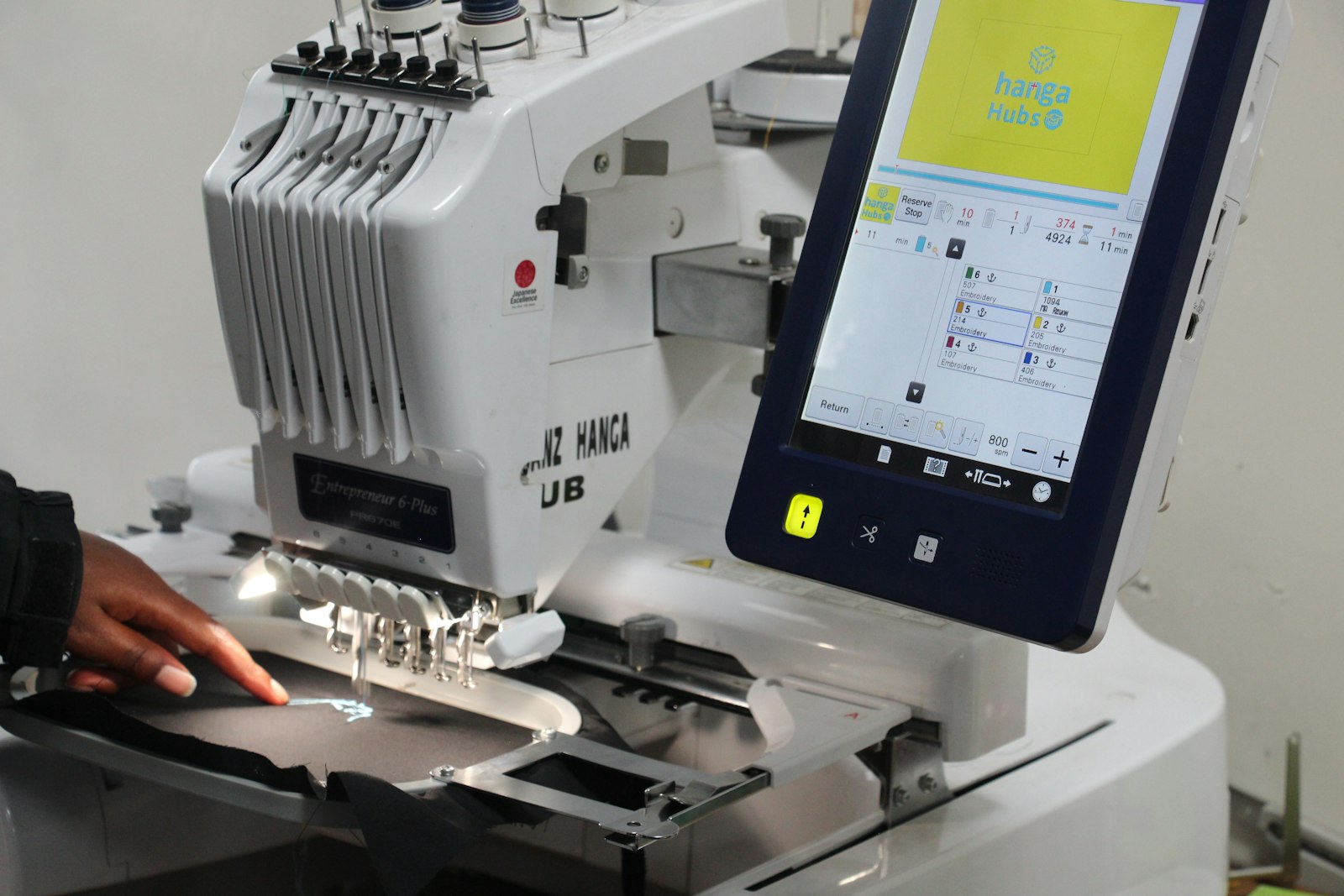
The Brother PE900 is the answer when the SE700’s 4x4 field has run out of room. Verified on Brother USA in June 2026, it embroiders in a 5 inch by 7 inch field, carries 193 built-in designs and 13 embroidery fonts, runs at up to 650 stitches per minute, and lists at $1,179.99. It is embroidery-only. There is no sewing mode, no buttonhole function, no utility stitching. If you want to embroider larger designs and you are comfortable having a dedicated embroidery machine rather than a combo, the PE900 is the obvious step up from the 4x4 tier.
The honest test is the 5x7 question: does your work actually need that field? The SE700 at $529.99 covers left-chest logos, names, small monograms, and flat patches. The PE900 earns the extra $650 for towel monograms, back-of-collar lettering, quilt block motifs, jacket patches, and larger-scale monograms. Know which design categories you’re actually going to run before you decide which machine to buy.
Stitch Specs
| Spec | PE900 |
|---|---|
| Type | Embroidery only |
| Max embroidery area | 5” x 7” (127mm x 178mm) |
| Built-in embroidery designs | 193 (plus 13 fonts) |
| Embroidery speed | 650 spm |
| Display | 3.7” LCD color touchscreen |
| Connectivity | Wireless LAN (Design Database Transfer, Artspira app) |
| File formats | PES (native), DST, PHC, PEN |
| Included hoop | 5” x 7” (large embroidery frame) |
| Included feet | Embroidery Foot “Q” |
| Bobbin | Quick Set drop-in |
| Workspace arm clearance | 7.4” needle to arm |
| List price (verified June 2026) | $1,179.99 |
The PE900 is sold through Brother’s authorized dealer network as well as major retailers. Specs verified against Brother USA’s PE900 page, June 2026.
Who the PE900 is for
The PE900 buyer already knows they want embroidery and has bumped into the 4x4 ceiling, or is buying for it the first time with 5x7 designs already in mind. Towel monogram sets, large quilt appliqués, multi-color jacket patches, name-and-number sports items: these are the projects that fit in 5x7 and do not fit in 4x4. The extra room is not cosmetic. A standard large-script three-letter monogram on a bath towel runs 4 to 6 inches tall. The SE700 cannot do it in one hooping; the PE900 can.
The buyer who should not buy the PE900: anyone who also needs to sew garments, hem trousers, or construct fabric projects from the same machine. The PE900 has no utility stitching at all. Its one presser foot is the embroidery foot. You cannot run a straight seam. For combo work, the Brother SE700 does both, and the comparison page runs the fork directly.
What owners praise, and what they report
Across Amazon, Walmart, and Home Depot retailer pages, r/MachineEmbroidery and r/sewing community threads, and PatternReview forum posts, owner reports cluster around three recurring patterns.
Most praised: the 5x7 field itself. Owners who switched from a 4x4 machine consistently report that 5x7 opens their design library in a material way. Designs they previously had to split across multiple hoppings now run clean in one shot. The screen editing (resize, rotate, reposition on the 3.7-inch display before you start) gets consistent praise for usability; the Color Sort function, which reorders design color changes to minimize thread swaps, is called out by owners who run multi-color work as a genuine time saver.
Most reported issue: wireless. The Design Database Transfer software works well once it’s working; getting it connected the first time, and keeping it stable with firmware updates, frustrates a meaningful share of owners. USB stick is the reliable fallback, and many PE900 owners default to it. This is consistent with the pattern on the SE700 and appears to be a characteristic of Brother’s wireless implementation across its consumer embroidery line, not a PE900-specific defect.
Second most reported: build consistency. Like most consumer-class embroidery machines, a small but visible share of owners report tension issues or stitch quality problems that trace back to a machine that arrived slightly out of calibration or with a bobbin case that needed adjustment. The majority of PE900 machines run fine out of the box; the minority that don’t need either a calibration adjustment or a warranty swap. Brother’s warranty and support channels handle this, but it is worth knowing before buying.
Third: learning curve. The PE900 is not a beginner machine in the sense that it rewards correct stabilizer choice and accurate hooping immediately. Owners who run it straight at a project without understanding backing requirements report more failures than owners who read the stabilizer guide first. This is the machine’s context, not its defect.
What 5x7 actually fits: the design category table
This is the information-gain table the PE900 content on most sites skips. Every row represents a real design category, with typical digitized dimensions and whether a single PE900 hooping handles it. Dimensions come from verified digitizing-convention sources and the r/MachineEmbroidery community’s design-sizing discussion, June 2026.
| Design category | Typical dimensions | Fits in 5x7? |
|---|---|---|
| Left-chest logo (shirt pocket) | 3.5” wide (Thread Logic) | Yes |
| Name or monogram (2–3 letters, 4” block) | 3”–4” wide | Yes |
| Towel monogram (large script) | 4”–6” tall | Yes (under 5” tall) / borderline |
| Quilt block motif (standard 6” block) | 4”–5.5” | Yes if kept under 5x7 |
| Jacket back patch | 7”–10” wide | No (split required) |
| Large back lettering / number | 6”+ | No |
| Hat front (structured cap) | 2.25” tall × 4” wide | Fits by dimensions, but needs cap frame the PE900 lacks |
| Baby bib / onesie design | 3”–5” | Yes |
| Tote bag center motif | 5”–6” | Yes for 5” or smaller |
The PE900 handles everything up through the top of the towel-monogram range in one hooping. Above 5 inches in either dimension, the design needs to be split or resized for the machine’s field, or you look at the digitizing software guide to find tools that split designs automatically.
Structured caps are the one category the table above can’t fully answer with a yes. The PE900 is a flat-bed single-needle machine with no cap frame system, so it can’t wrap around a curved brim at all. The workaround, if a cap logo comes up without justifying a multi-needle machine, is to embroider a flat patch up to 5x7 on the PE900 and sew it onto the hat afterward. For direct cap embroidery, you need a machine built for it, like the Brother PR680W with its cap frame attachment.
Consumables budget per month
At a hobby pace of around 8 medium designs per month (5x7 field projects on stable woven fabric), current Amazon prices as of June 2026:
| Consumable | Basis | Per month (~8 projects) |
|---|---|---|
| Cutaway stabilizer | 100-sheet 10x12 pack ~$25–30; ~1 sheet per project | ~$2.00–2.40 |
| Embroidery thread (top) | 63-color 550yd kit ~$30–40 amortized | ~$2.00–3.00 |
| Bobbin thread | 60wt prewound, a few cents per design | ~$0.50–1.00 |
| Total | ~$4.50–6.50 / month |
Prices are approximate, verified against mid-range Amazon listings June 2026, not a single locked SKU. At hobby pace, consumables are the last thing to worry about. The bigger upfront cost is a starter thread kit and a stabilizer supply, both in the $25 to $40 range.
Check current price on cutaway stabilizer packs
As an Amazon Associate, Needle Down earns from qualifying purchases.
For a full breakdown of which backing goes with which fabric and project type, the stabilizer guide has the weight chart and cost-per-project math.
The file ecosystem, briefly
The PE900 reads PES (Brother’s native format), DST, PHC, and PEN, verified on Brother’s format support page, June 2026. When you shop for designs, buy PES. One important practical note from the format page: files must be in the root directory of the USB drive, not in subfolders, or the machine will not find them. That is a common source of “my designs aren’t showing up” reports.
The wireless workflow uses Brother’s free Design Database Transfer software to push files from a PC. It works; getting it set up the first time takes patience. USB is the fallback.
The full file-format and design-sourcing landscape is covered in the embroidery file formats guide.
Buy the SE700 instead if you also need to sew
The PE900 versus SE700 question is the most common buyer fork in this niche, and it is genuinely simple: is embroidery the whole point, or do you also need to sew? If you sew garments, hem fabric, or construct items as well as embroider, the SE700 is the practical choice. It covers both uses in one machine at $529.99, at the cost of 4x4 field rather than 5x7.
If embroidery is the whole point, the PE900’s larger field and dedicated embroidery-only configuration earn the premium. The full head-to-head is in the PE900 vs SE700 comparison.
For buyers who have outgrown both and are looking toward business volume, the Brother PR680W is the six-needle commercial step up: direct cap embroidery with a cap frame attachment, 8x12 field, 1,000 spm, and no re-threading between color changes.
The PE900 is the right machine for the buyer who has been running a 4x4 machine and kept bumping into its ceiling, or who is starting out with 5x7 work already in mind. It earns its price if that design range is real for you. It does not earn its price if you mostly do left-chest logos and names, because the SE700 does those just as well for $650 less.