Roundups 10 min read
Best Longarm Quilting Machine: Price Tiers Explained
Longarm machines run $7,999.95 to $27,100. Entry mechanical vs computerized tiers, frame length, the Handi Quilter Amara, and who needs one over a mid-arm.
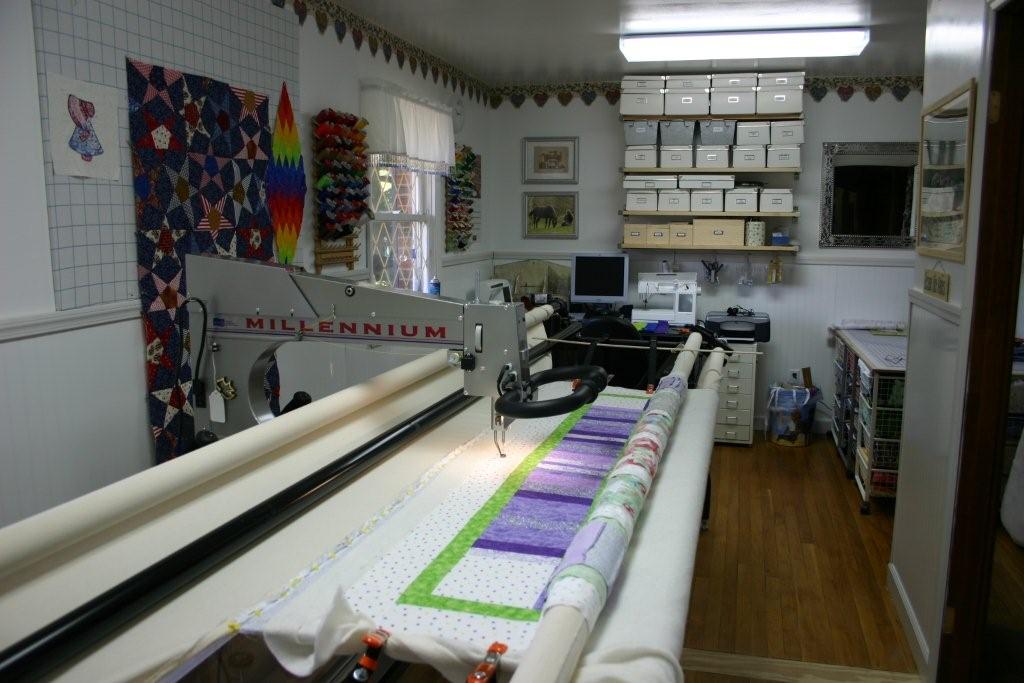
A longarm quilting machine is a frame-mounted machine with an 18-to-24-inch throat, built to quilt a full-size top edge to edge without folding or rolling it through a home machine’s small work area. Entry mechanical models start around $8,000. Computerized, robotic-capable machines run from roughly $15,000 past $27,000. The right one depends on how much quilt you’re actually finishing, and how often.
Domestic, mid-arm, or longarm: three different machines
The word “throat space” (also called harp space) shows up across all three categories, but the numbers aren’t close. A domestic dedicated quilting machine like the Juki TL-2010Q tops out at 8.5 inches. A mid-arm roughly doubles that. A longarm doubles it again.
| Category | Throat space | Frame length | Typical price | Best for |
|---|---|---|---|---|
| Domestic quilting machine | 5.7” to 8.5” | None (tabletop) | $700 to $1,200 | Piecing and quilting smaller projects in sections |
| Mid-arm | 12” to 17” | 5 to 6 feet | $4,000 to $5,000 | Hobbyists moving up, limited studio space, sit-down operation |
| Longarm, entry mechanical | 18” to 22” | 8 to 12 feet | $8,000 to $16,000 | Full-size quilts finished regularly, hand-guided or stitch-regulated |
| Longarm, computerized-capable | 20” to 28” | 8 to 14 feet | $15,000 to $27,000+ | Repeatable edge-to-edge patterns, production pace, part-time business |
Domestic figures reflect the Brother PQ1500SL and Juki TL-2010Q, both dedicated straight-stitch machines rather than general sewing machines. Mid-arm and longarm figures are sourced from The Grace Company and Authorized Vac & Sew, dated in the sources block below.
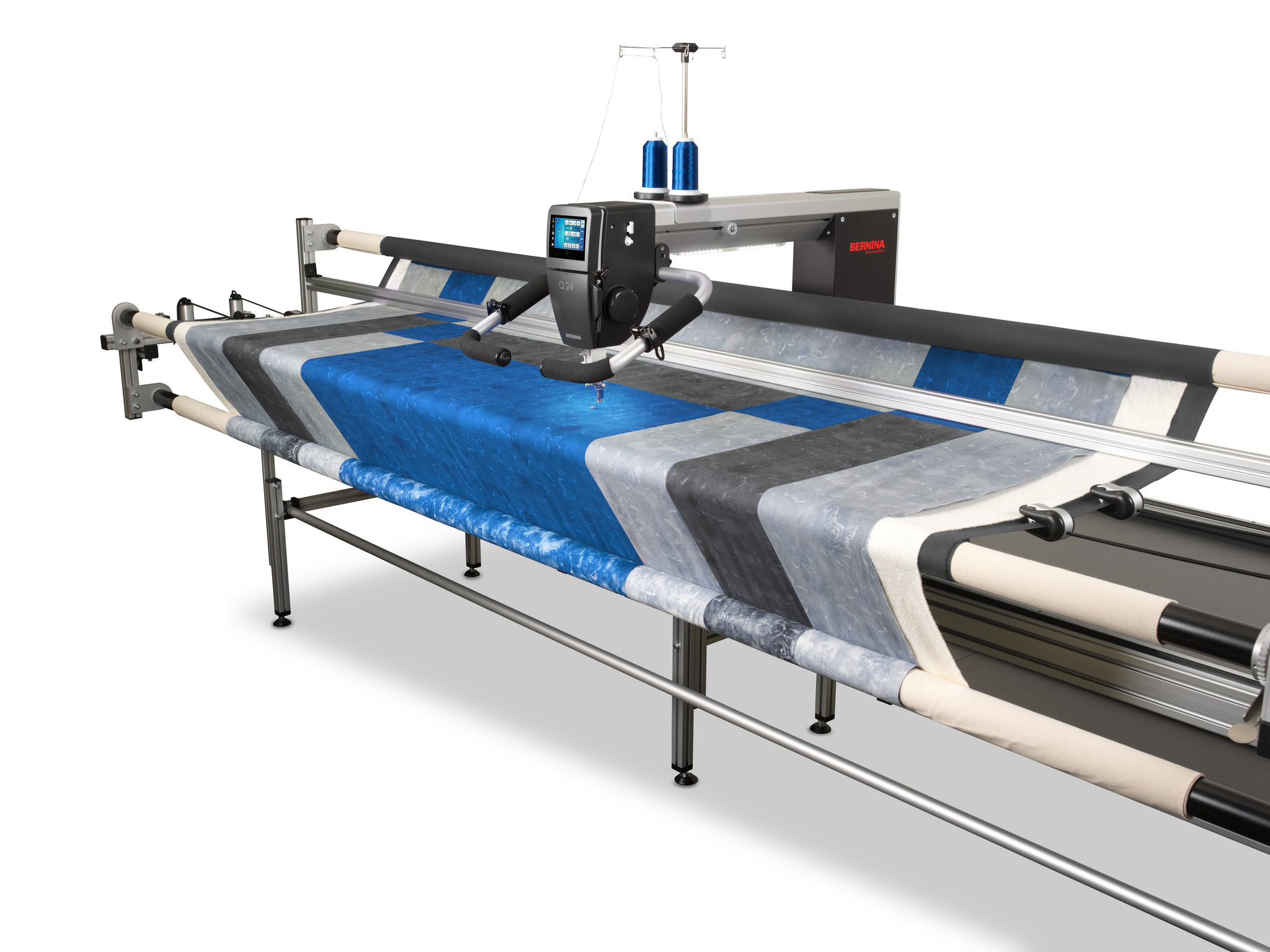
What a longarm quilting machine actually is
On a domestic machine, the fabric moves and the needle stays fixed: feed dogs pull the layers through at a set stitch length. A longarm inverts that. The quilt top, batting, and backing get rolled onto separate bars on a stationary frame, and the machine head, needle, motor, bobbin, and all, rides on rails above the fabric. The operator moves the machine, not the other way around. There are no feed dogs to fight, which is also why a longarm can’t do standard seaming or garment construction. It does one job: it quilts a sandwich that’s already been pieced somewhere else.
That single-purpose design is what buys the throat space. A domestic machine’s 5.7 to 8.5 inches has to share the chassis with a full sewing mechanism. A longarm’s 18-plus inches exists because the whole machine is built around clearing that much fabric under the needle without repositioning the quilt.
Do you need a longarm, or is a mid-arm enough?
Most first-time buyers overshoot. A mid-arm at $4,000 to $5,000, sitting on a compact 5-to-6-foot frame, covers a genuine amount of ground: throw quilts, baby quilts, most lap quilts, and plenty of twin-size tops if you’re patient about repositioning. It’s also the machine Authorized Vac & Sew and other dealers consistently point beginners toward, because the smaller working area is less overwhelming to learn on and the compact frame fits a spare bedroom instead of a dedicated room.
A longarm earns its price when you’re finishing queen and king tops regularly, when edge-to-edge or all-over patterns matter more than piece-by-piece precision, or when quilting is turning into paid work and throughput matters. If you’re quilting one or two lap quilts a year, a longarm’s 8-to-12-foot frame and $8,000-plus entry price is a lot of machine sitting mostly idle. Piecing the top itself, before it ever reaches a frame, doesn’t need any of this: a budget domestic machine like the Singer Heavy Duty 4452 sews the blocks together fine on its own.
How much does a longarm quilting machine cost?
The honest range, verified against manufacturer and authorized-dealer pages in July 2026:
| Machine | Throat | Speed | Starting price | Notes |
|---|---|---|---|---|
| Grace 21 | 21” | 1,800 spm | $7,999.95 | Machine only; Continuum II frame adds $2,999.95+ |
| Handi Quilter Amara 20 | 20” | 2,500 spm | $12,995.00 | Includes 5-ft Little Foot Frame; 10-ft/12-ft frames run $14,495 to $14,995 |
| APQS Lenni | 22” | 3,500 spm | $15,500.00 | Entry point in APQS’s line |
| BERNINA Q24 | 24” | 2,200 spm | Dealer quote | Pro Frame sizes 8’10” to 12’11” priced separately |
| APQS Millie | 26” bed | 3,500 spm | $26,999.00 to $27,100.00 | Financing available; includes beginner’s class access |
| INNOVA M20/M24/M28 | 20”/24”/28” | Varies | Dealer quote only | No published pricing; AutoPilot Mach 3 optional-to-standard |
Two things trip people up on price. First, the sticker figure is frequently machine-only. Grace splits the machine ($7,999.95) from the frame ($2,999.95 and up) as separate line items; other brands bundle a specific frame size into the base price and charge more for a longer one. Second, several premium brands, INNOVA and BERNINA among them, simply don’t publish price and route every quote through a dealer. Treat “starting at” figures as a floor, not a final number, until a dealer has quoted your actual frame length and any computerized add-on.
Mechanical vs. computerized: what’s the actual difference?
Every longarm on this list can be hand-guided: the operator physically moves the machine head to trace a free-motion design, with stitch regulation (present on all the models above) keeping stitch length even regardless of how fast or slow the hand moves. That’s the entire mechanical tier.
Computerized systems add a motor-driven carriage that follows a digitized pattern automatically, without a hand on the machine. Handi Quilter calls theirs Pro-Stitcher; APQS calls theirs Quilt Path; INNOVA calls theirs AutoPilot Mach 3. The systems do the same core thing: load a pattern file, set the boundaries, and the machine stitches it, repeatably, at a pace a hand can’t sustain over a full king-size top. That’s the feature that turns a longarm from a very capable hobby machine into something that can run overnight or take on paying orders.
The catch is cost. A computerized system is usually a $5,000-to-$10,000 add-on over the base mechanical price, whether bought at purchase or retrofitted later. The Amara ships with the cabling already run for Pro-Stitcher, which lowers the retrofit cost specifically, but the controller and software are still purchased separately.
The Handi Quilter Amara: a mid-tier example worth knowing
The Amara sits at an unusually useful spot in this market. At $12,995.00 with the compact 5-foot Little Foot Frame, it’s priced between Grace’s entry mechanical machine and APQS’s Lenni, but it ships with the Pro-Stitcher cabling already installed. That means buying mechanical now and adding the computerized controller later is a software-and-hardware purchase, not a re-wiring job. The 20-inch throat and up to 2,500 spm put it in the same performance range as the APQS Lenni and BERNINA Q24, and the three frame options (5-ft Little Foot, 10-ft, or 12-ft Studio) let a buyer match frame length to room size without switching brands.
The full model breakdown, including owner-reported experience with the QuiltMaster handlebars and Easy-Set Tension system, is in the Handi Quilter Amara review.
Frame length and floor space, in real numbers
Frame length is the dimension buyers most often underestimate. A mid-arm’s 5-to-6-foot frame sets up on a standard sewing table in a spare room. A longarm’s frame runs 8 to 12 feet as the norm, and the premium end goes further: BERNINA’s Large Pro Frame is 12’11”, APQS lists table options up to 14 feet, and Handi Quilter’s own Studio Frame options top out at 12 feet.
The frame length isn’t padding. It’s the roller system that holds the quilt taut across its full width and lets the machine travel the full length without running out of rail. A 10-foot frame needs meaningfully more than 10 linear feet of usable room, since the operator has to walk the full length on both sides and the machine head itself adds clearance at each end. This is the single biggest reason longarm shopping starts with a tape measure of your actual room, not a spec sheet.
The best longarm quilting machine for beginners
If you’ve never quilted on a frame before, the lowest-friction real entry points are the Grace 21 ($7,999.95, mechanical, built-in stitch regulation) and the Handi Quilter Amara on its 5-foot Little Foot Frame ($12,995.00). Both come from brands with dealer networks and hands-on classes rather than a bare machine bought off a classifieds listing with no support behind it. APQS’s Millie listing at Quilted Joy includes beginner’s class access with purchase, and that pattern, a class bundled with the machine, is common enough across dealers that it’s worth asking for explicitly if it isn’t already offered.
The alternative worth stating plainly: if you’re not sure a longarm is right yet, start on a mid-arm. Grace’s own Q’nique 15 line runs $3,999.95 to $4,999.95, a third of even the cheapest longarm here, and it’s a real way to learn frame quilting before committing five figures to a machine you might outgrow, or might not.
How to actually approach a $5,000 to $25,000-plus purchase
This isn’t an impulse buy, and the brands in this roundup don’t sell it like one. Almost every machine here is dealer-distributed rather than direct-to-consumer, which is a feature, not friction, at this price point. A few things worth confirming before signing anything:
- Is the frame included in the quoted price, or a separate line item? Grace splits them explicitly; ask every brand the same question, because “starting at” figures often mean machine-only.
- What does the computerized upgrade path actually cost, and does the machine you’re buying support it without a re-wire? The Amara’s pre-installed Pro-Stitcher cabling is a concrete example of a machine designed to make that upgrade cheaper later.
- What’s the warranty, and who services it locally? APQS backs its line with a lifetime parts-and-labor warranty. A machine this size doesn’t ship back to a factory for routine repair, so ask specifically who does warranty and post-warranty service in your area before buying.
- Is financing available, and what’s the real monthly number? Quilted Joy lists Millie financing as low as $418 a month over 60 months on a $26,999 machine. That reframes a five-figure sticker price into a number worth comparing against what you’d actually spend on other equipment.
- Does the floor space and power supply work? Longarms run on standard household current, per APQS’s own listing, so electrical isn’t usually the blocker. Floor space and a stable, level, dedicated surface for the frame length you’re buying is.
Get a hands-on demo before buying if a dealer is within reach. Every brand here sells through a network built for exactly that, and a machine you’ll own for a decade or more is worth a drive.
Coated fingertips grip the handlebars and fabric without dragging; the uncoated palm keeps hands from overheating through a long quilting session.
A quarter-inch acrylic ruler built for the thicker rail height on mid-arm and longarm machines, not the thinner rulers made for a domestic machine bed.
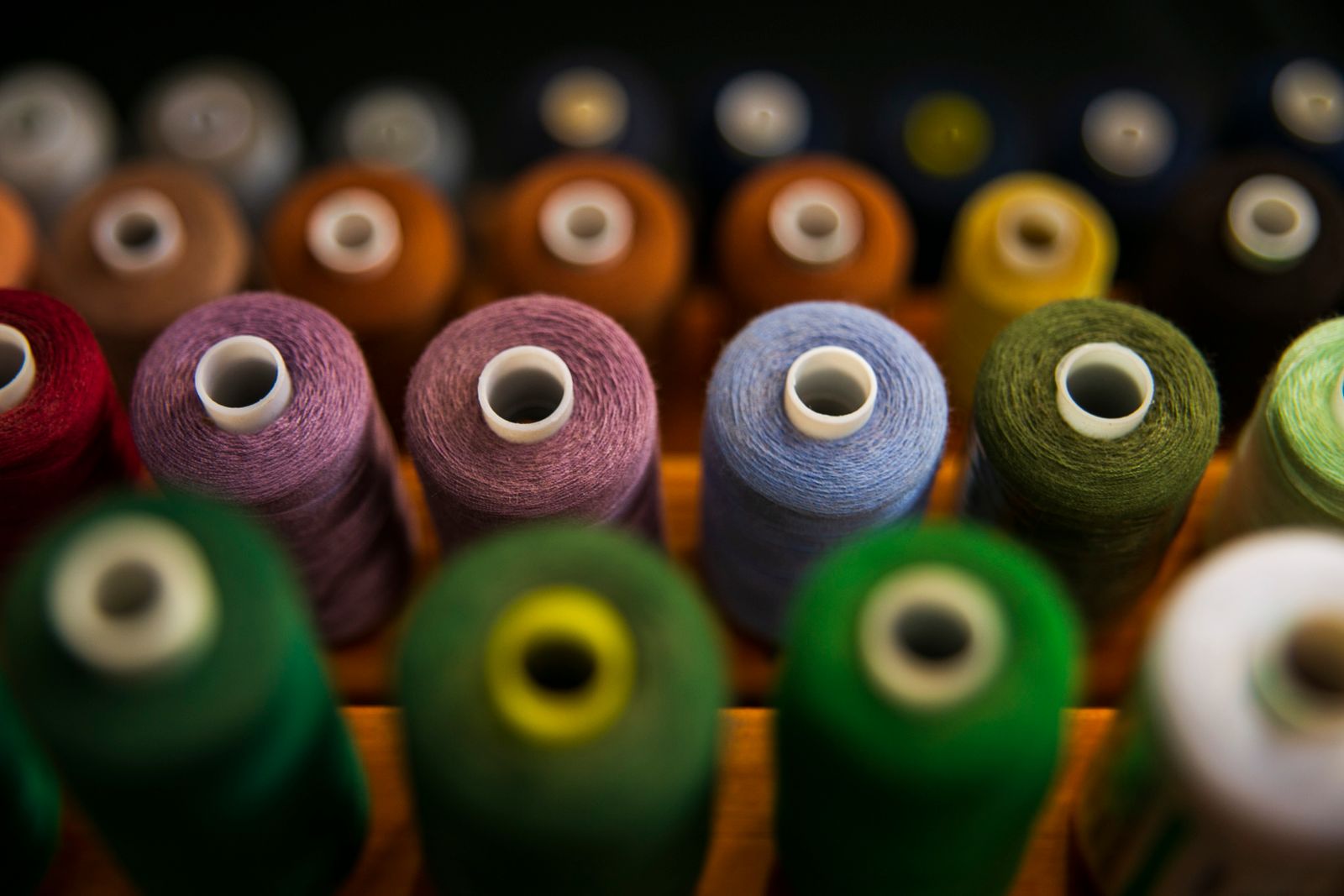
Cone-format thread built for the volume a longarm burns through on full-size tops, in the low-lint cotton finish most longarm quilters standardize on.
Needle changes matter here too. Heavier battings and dense edge-to-edge patterns dull a needle faster than ordinary piecing, and running a dull needle on a longarm shows up as skipped stitches across a whole quilt rather than one seam. The machine needles guide covers sizing for that kind of sustained, heavy-fabric use.
Consumables and technique aside, the choice that actually matters is the one this whole guide is about: throat space and frame length against the quilts you actually finish, not the ones you imagine finishing. A Brother PQ1500SL or Juki TL-2010Q piecing machine, a mid-arm, and a longarm all have a real place. Buy the one that matches this year’s projects, not an aspirational one three sizes up.
As an Amazon Associate, Needle Down earns from qualifying purchases.