Guides 6 min read
Embroidery Hoop Sizes Explained: 4x4, 5x7, and Beyond
Every standard hoop size from 4x4 to 14x14 inches, what design categories fit each field, and which home embroidery machines are compatible with which frames.
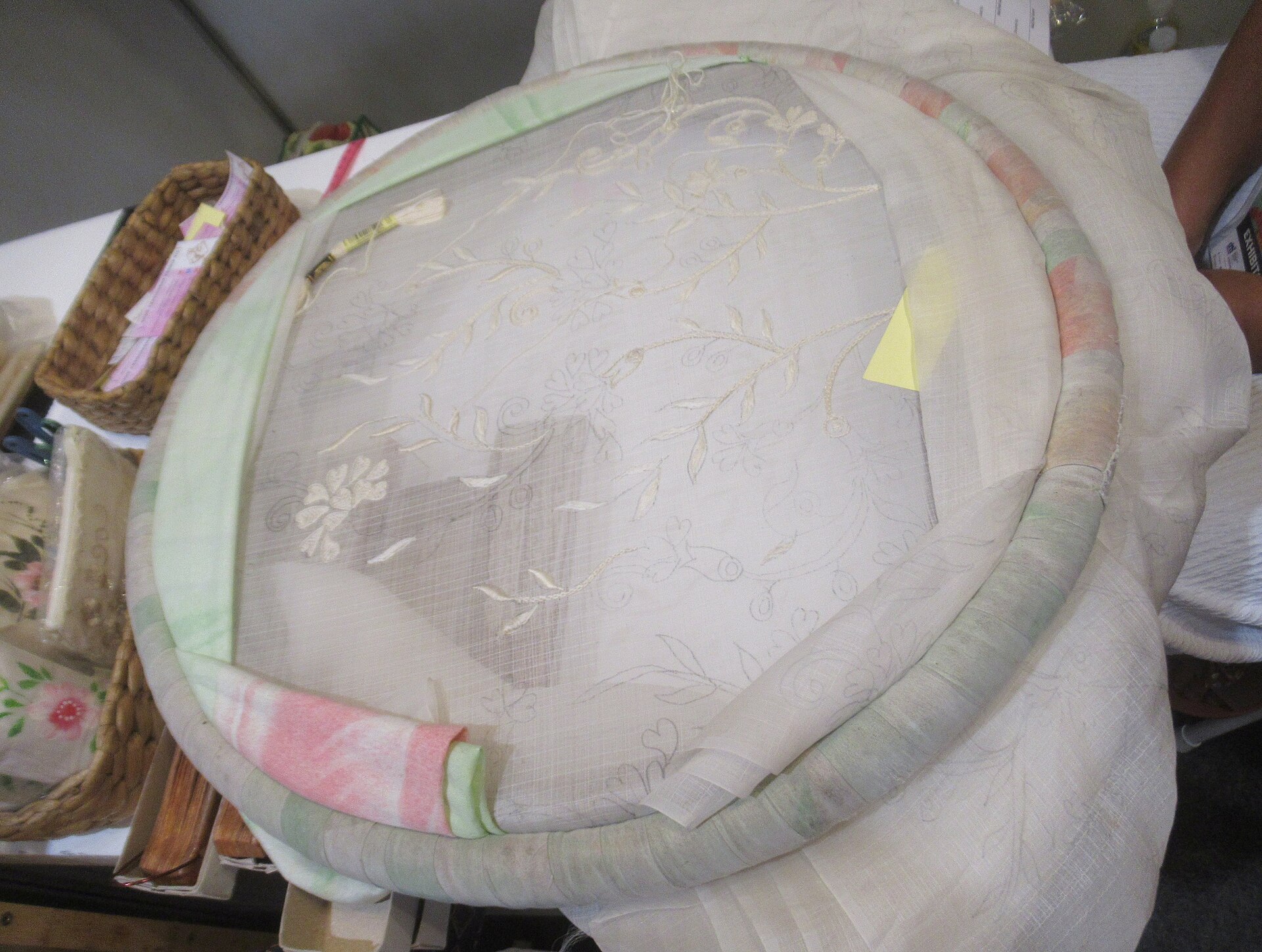
The 4x4 inch hoop (100x100mm usable field) is the standard for home embroidery machines. The 5x7 inch hoop (roughly 130x180mm) is the next size up. Most major home embroidery machines max out at one of these two sizes. Everything above 5x7 is handled by semi-commercial or commercial machines.
This guide covers every standard size, what designs fit each field, and which machines support which hoops.
Hoop size chart: nominal versus usable field
The size printed on a hoop is the nominal field. The usable field is slightly smaller because the inner ring clamps fabric at the edge. Designs placed exactly at the nominal boundary may clip.
| Nominal size | mm equivalent | Usable area | Design categories |
|---|---|---|---|
| 4x4 | 100x100mm | ~3.8x3.8” | Left-chest logos, monograms, small patches, pocket accents |
| 5x7 | 130x180mm | ~4.8x6.8” | Large monograms, baby items, quilt blocks, mid-size decorative |
| 6x10 | 160x260mm | ~5.8x9.5” | Oversized lettering, large floral, full-front designs |
| 8x8 | 200x200mm | ~7.8x7.8” | Large logos, full quilt blocks, wide badge designs |
| 8x12 | 200x300mm | ~7.8x11.5” | Table runners, wide back designs, long banners |
| 14x14 | 360x360mm | ~13.5x13.5” | Full-front shirts, large decorative panels |
The 14x14 field requires commercial or multi-needle machines. Home machines do not reach it.
Machine compatibility by hoop size
| Machine | Max hoop | Machine type |
|---|---|---|
| Brother SE600 | 4x4 | Combo (discontinued) |
| Brother SE700 | 4x4 | Combo |
| Brother PE900 | 5x7 | Embroidery-only |
| Brother PR680W | 7.9x11.8” | 6-needle commercial |
The SE700 and SE600 share the same 4x4 maximum. The PE900’s 5x7 field opens designs that neither Brother combo machine can handle. The PR680W operates in a different category entirely.
A “5x7 max” machine isn’t locked to 5x7. It accepts smaller hoops too, including 4x4, and reads which hoop is mounted through a sensor or code on the frame, then constrains the design area to match. Most embroiderers running a PE900 or similar 5x7 machine keep both a 4x4 and a 5x7 hoop on hand and swap depending on the design instead of forcing every project into the larger frame.
What fits a 4x4 field
The 4x4 is the most supported hoop size across home embroidery designs. Most commercial design files sold online include a 4x4 version. Here’s what the field handles:
Works well:
- Left-chest logo placement: typically 3 to 3.5 inches wide, centered, which fits the 4x4 field with room to spare
- Standard monograms: three-letter monograms in the 2.5 to 3.5 inch range
- Pocket placement: small decorative motifs on shirt pockets, back pockets, and bag front panels
- Small patches: patch designs up to about 3.7 inches fit cleanly; any border or frame outside the main motif should be factored into the total width
Borderline:
- Full 4-inch block designs with outer frame elements: the frame may clip slightly at the edge. Many designers account for this by keeping the total design at 3.8 inches even when labeled “4x4 compatible.”
Does not fit:
- Large towel monograms (typically 4 to 6 inches wide)
- Baby blanket center panels (usually 4 to 5 inches or larger)
- Full back lettering (typically 5 to 7 inches wide)
- Wide logo designs over 3.9 inches
If your designs regularly hit the 4x4 ceiling, that’s the clearest signal to upgrade to a 5x7 machine.
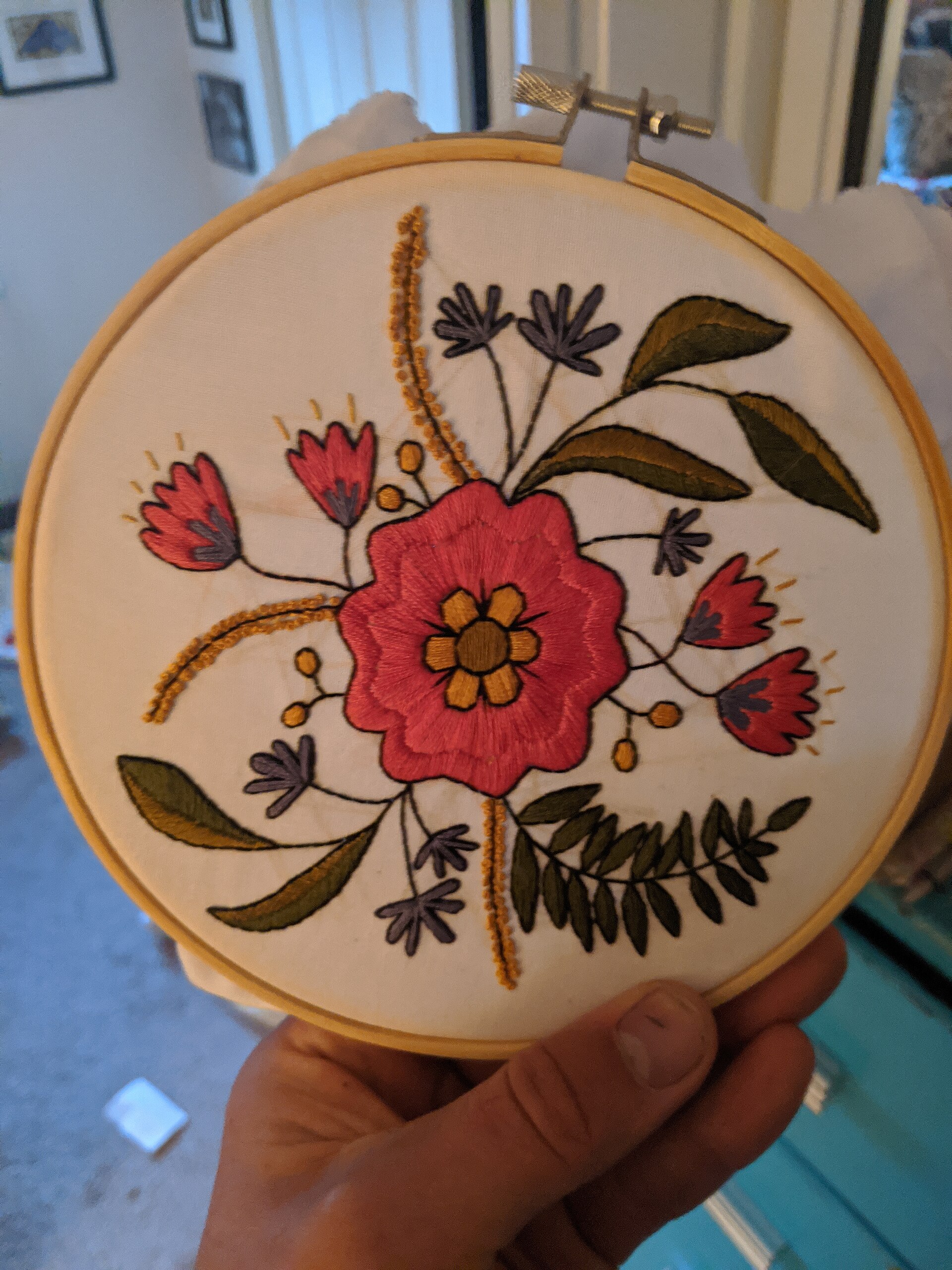
What opens up at 5x7
The step from 4x4 to 5x7 is not just two more inches. The aspect ratio changes from square to landscape rectangle, which unlocks a different category of designs entirely.
Newly fits at 5x7:
- Oversized monograms: 4 to 5 inch wide three-letter monograms on large bath towels and robes
- Baby blanket and infant item center panels: the 5x7 field matches the typical “fill stitch center block” size on infant blankets
- Quilt blocks: standard 5-inch and 6-inch quilt block designs are common in the embroidery design market and require 5x7 or larger
- Sports jerseys: back-number and name combinations that don’t fit in 4x4
The PE900 at $1,179.99 is the most common home machine in this tier. Its 5x7 field is the reason buyers who know they need larger designs skip the SE700 and go straight to the PE900.
Specialty hoops: beyond the standard flat frame
Standard hoops hold flat fabric between two rings. Several categories of work require different frame types:
Cap frames: Curved to match the brim of a structured cap. They clamp onto the machine’s arm differently than flat hoops and position the front panel of the hat horizontally in front of the needle. The effective design area on a standard cap frame is roughly 2.3 inches high by 6 to 7 inches wide. The SE700 and PE900 do not support cap frames. Cap embroidery requires either a PR-series machine from Brother or a machine specifically designed for hat work. For the full breakdown, the embroidery machines for hats guide covers compatible machines and cap frame types.
Quilt hoops: Larger flat hoops (8x8, 8x12, 14x14) designed for quilting panels and large decorative work. Standard home machines cannot reach these sizes. They’re territory for commercial machines.
Clamp frames: Used on tubular fabric items (towel borders, shirt sleeves, pant legs) where a standard ring hoop can’t be pressed around a cylinder. These clamp to the surface without requiring the fabric to be wrapped around an inner ring.
Tubular frames: Similar to clamp frames but designed specifically for cylindrical items with full 360° stitchability on multi-needle machines.
Magnetic hoops are a newer accessory category worth knowing about: strong magnets replace the screw-tension ring, clamping the fabric evenly without cranking a thumbscrew. They speed up hooping and reduce hoop-tension inconsistency, at standard 4x4 and 5x7 sizes compatible with most home machines.
Clamps fabric with magnets instead of a screw-tension ring, which speeds up hooping and evens out tension across the frame.
Choosing the right hoop for what you’re making
The hoop is not an accessory; it defines your machine’s capability ceiling. Before buying a machine:
- Identify your most common design size. If it’s consistently under 3.5 inches, the 4x4 on an SE700 covers you. If you’re frequently looking at 4-to-5-inch designs, you need a PE900 or larger.
- Check what sizes the design files you plan to buy include. Most commercial design sites list which hoop sizes are included per design. If your machine’s hoop size is not listed, you need conversion software.
- Don’t buy a machine for the hoop size alone. Field size matters, but so does the machine’s overall spec. The PE900 vs. SE700 comparison covers both machines in full.
Both of the sizes that cover the large majority of home machines in this guide, so you can switch without waiting on a single hoop.
For stabilizer selection by fabric type and hoop size, the embroidery pricing calculator also covers material cost per design as field size scales. For buyers comparing the SE700 and PE900 specifically around the 4x4 vs. 5x7 decision, the PE900 vs. SE700 guide covers both machines in full.