Guides 10 min read
Commercial Embroidery Machine Guide: Brands and Prices
What separates a commercial embroidery machine from a home model, real Brother, Tajima, Melco, and Barudan prices, and how many needles you actually need.
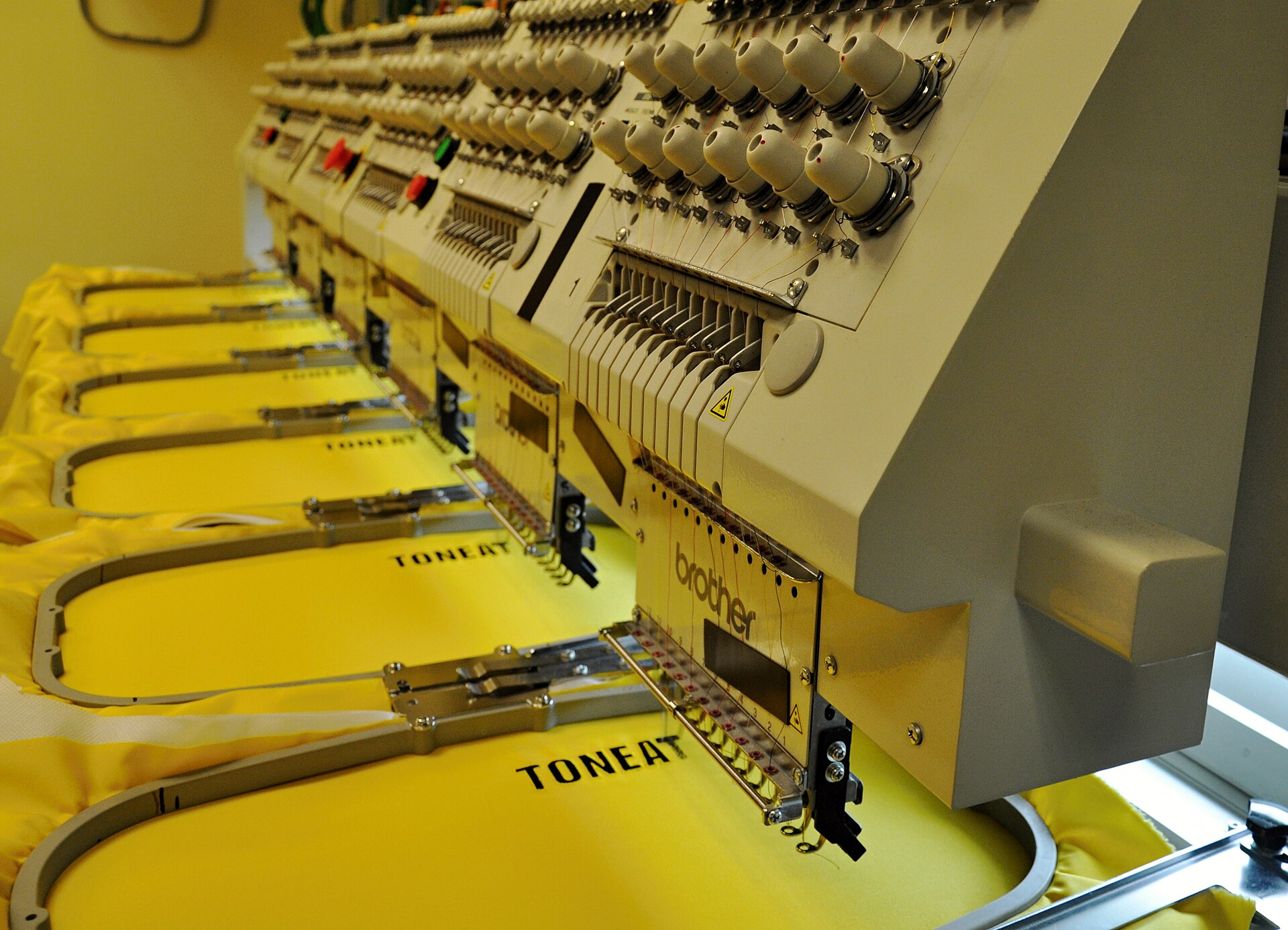
A commercial embroidery machine is a multi-needle machine, 4, 6, 8, 10, 15, or 16 needles loaded with a separate thread color each, built to run identical designs across dozens or hundreds of pieces without stopping for a manual thread change. Real 2026 pricing starts around $12,999 for an entry 6 to 8-needle machine (Brother PR680W, Juki/Tajima SAI) and climbs past $30,000 for a single-head industrial machine, with multi-head production systems running $30,000 to $75,000 and up. Every home embroidery machine on this site, by contrast, is single-needle.
What actually separates a commercial machine from a home machine
The needle count is the headline number, but it’s a proxy for a deeper difference: what the machine is built to survive. A home machine like the Brother PE900 is engineered for a few hours a week. A commercial machine is engineered to run 8 to 16 hours a day, every day, for years, without the motor, the hook timing, or the frame drifting out of tolerance.
That duty-cycle difference shows up in three places. First, the drive mechanism: commercial machines from Barudan and Tajima use positive needle drive, a mechanically timed system that keeps every needle in exact sync regardless of speed, rather than the belt-and-cam systems in consumer machines. Second, the frame: a Barudan Pro3 weighs 211 pounds; a Brother PE900 weighs about 17. Third, the support model. Home machines are box-store or Amazon purchases with a manufacturer warranty card. Commercial machines are sold through authorized dealers who calibrate, install, and train on delivery, because a machine running production hours needs a service relationship, not a return window.
None of this means a commercial machine is simply “better.” A hobbyist running a dozen pieces a month gets nothing from 15 needles and a 96-kilogram frame except a much bigger bill. The first embroidery machine buying guide covers the decision tree for that buyer. This guide is for the other buyer: someone who has, or expects to have, enough order volume that a single-needle machine has become the bottleneck.
How many needles do I actually need?
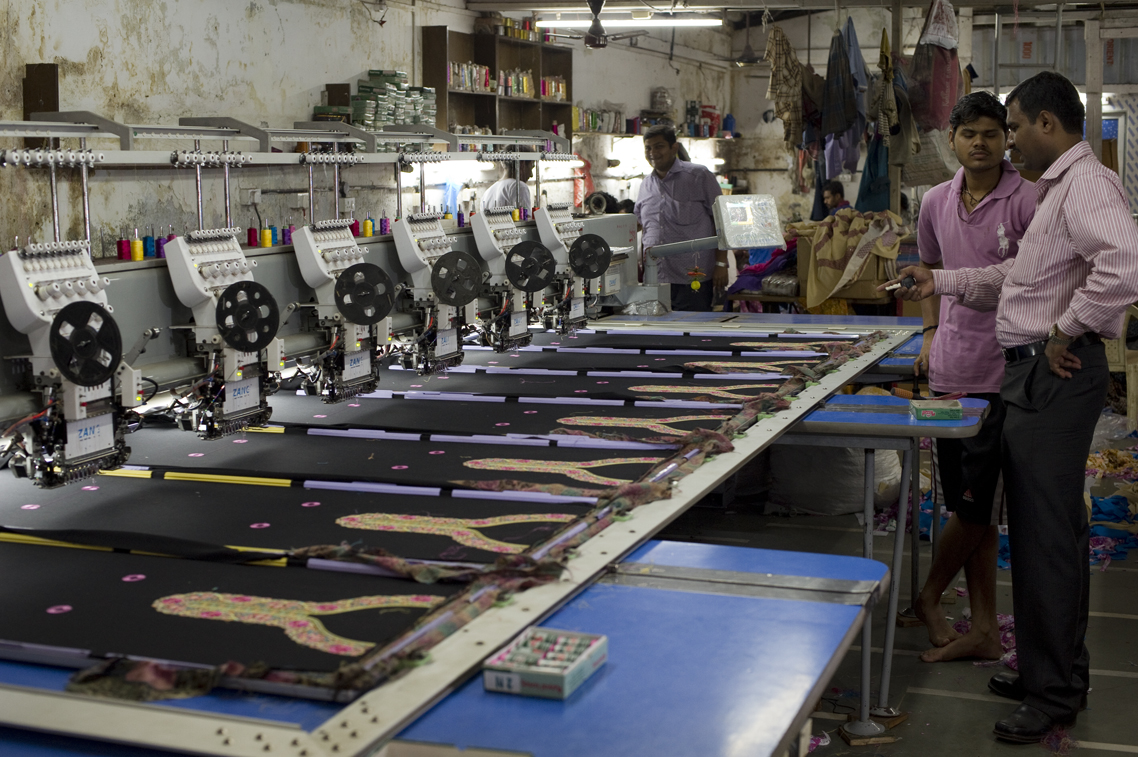
Needle count solves exactly one problem: how many thread colors a design can run through before the machine has to stop and wait for a human. A single-needle home machine stops at every color change. A 6-needle machine like the Brother PR680W runs any design of 6 colors or fewer start to finish with zero stops; a 7th color forces one manual swap. A 16-needle Melco Bravo or Summit clears almost any standard commercial design (left-chest logos, cap fronts, most jacket backs) without ever pausing.
The honest framework: count colors, not ambition. Pull your 10 most common designs and count the maximum color count across them. If it’s 5 or 6, a 6-needle machine (PR680W, roughly $13,000) covers essentially everything you run. If your catalog regularly hits 8 to 12 colors, an 8-needle Tajima SAI or a 10-needle PR1055X earns its higher price. Buying 16 needles to run 4-color logos is buying capacity you will never use; the marginal needles above your actual color count add cost and threading time at every session without adding throughput.
The Brother PR680W review breaks down the specific production-time math for a 6-needle machine against a single-needle PE900 on a 5-color design, if you want the exact minutes-per-piece comparison before deciding how many needles to buy.
| Machine | Needles | Max field | Speed (spm) | Price (verified July 2026) |
|---|---|---|---|---|
| Brother PR680W | 6 | 8” x 12” | 1,000 | $12,999.99 street |
| Juki/Tajima SAI | 8 | 7.8” x 11.8” | 800 | $12,999.00 |
| Brother PR1055X | 10 | 8” x 14” | 1,000 | $20,799.99 |
| Melco Bravo | 16 | 12.7” x 10.5” | 300-1,100 | $8,995-$13,495 |
| Melco EMT16X | 16 (modular, up to 30 heads) | machine-dependent | machine-dependent | $18,995-$21,995 |
| Melco Summit | 16 | machine-dependent | up to 1,500 | $19,745.00 |
| Barudan Pro3 | 15 | ~15” x 19.7” | up to 1,300 | $25,000-$30,000 |
| Barudan 8-head system | 15 per head | 17.7” x 20.5” per head | up to 1,100 (flats) | $74,995+ |
Field size and speed vary by configuration on the modular Melco machines; check the current build sheet with the dealer before comparing on those two rows.
Commercial embroidery machine brands: Brother, Tajima, Melco, Barudan
Four names cover most of the commercial market, and each has a distinct reason a shop picks it.
Brother is the accessible entry point. The PR680W and PR1055X are the only machines on this list sold through the same general dealer network that sells home machines, and Brother’s My Stitch Monitor app links up to 10 machines from one tablet. For a shop moving up from a PE900 or SE700, staying in the Brother ecosystem means the same PES file format and a support channel the owner may already know. The tradeoff is a lower speed ceiling (1,000 spm across the whole Brother commercial line) than the fastest Melco and Barudan machines.
Tajima is the standard a lot of production houses default to, largely because of scale: Tajima sells single-head machines from the compact 8-needle SAI up through flagship cylinder-type models, and multi-head systems from 2 to well beyond 8 heads, all through Hirsch Solutions, the brand’s exclusive US distributor, and its regional dealer network. The SAI’s $12,999 price point puts it directly against the PR680W and the Juki/Tajima SAI listing is in fact the same 8-needle machine (Juki and Tajima co-brand this specific model in the US).
Melco differentiates on software and modularity. The DesignShop software line (bundled at different tiers with the Bravo, and standard with the Summit and EMT16X) handles digitizing and design editing in the same ecosystem as the machine, and the EMT16X’s defining feature is that it’s explicitly built to network, up to 30 heads sharing one production floor. Melco’s Bravo at $8,995 to $13,495 is the most accessible true 16-needle machine on the market, financeable from around $194 a month per MaggieFrameStore’s dealer guide.
Barudan sells on mechanical durability and resale value. The positive needle drive system and the 5-3-2 warranty structure (5 years on the main motor) are built for shops that expect to run the machine for a decade, and HoopTalent’s dealer survey found used Barudan single-head machines retaining roughly 70 percent of new value years into service, better resale than most of the category. That durability comes at the top of the price ladder: a new Pro3 single-head runs $25,000 to $30,000, and an 8-head production system starts at $74,995.
How much does a commercial embroidery machine actually cost?
Real 2026 pricing sorts into four rough tiers, and the tier that matters is usually determined by needle count and head count, not brand.
Entry multi-needle, $12,000 to $13,000. The Brother PR680W (6 needles) and the Juki/Tajima SAI (8 needles) both land here, verified against current dealer listings in July 2026. This is the tier for a shop moving off a single-needle home machine for the first time: enough needles to clear most standard designs without color stops, still light enough (82 to 84 pounds) to move around a small studio, still dealer-supported but not a major capital commitment.
Mid single-head, $19,000 to $22,000. Brother’s 10-needle PR1055X and Melco’s Summit and EMT16X sit here. The jump buys either a bigger field (the PR1055X’s 8x14 inch area handles jacket backs and oversized patches the PR680W can’t), higher speed (Melco’s Summit runs up to 1,500 spm versus the Brother line’s 1,000), or networked scalability (the EMT16X links up to 30 heads as the shop grows).
Industrial single-head, $25,000 and up. Barudan’s Pro3 and Tajima’s flagship single-head cylinder models live here, built for daily 8-plus-hour production with the positive-needle-drive mechanics that lower-tier machines don’t have.
Multi-head production systems, $25,000 to $75,000-plus. A 2-head system starts around $25,000; an 8-head Barudan system lists at $74,995 and up, per HoopTalent’s September 2025 dealer survey, with 12, 15, and 20-plus head configurations climbing well past that for high-volume contract shops.
Two things soften every number above. Financing is standard in this category: Melco’s own dealer pricing guide lists Bravo financing from roughly $194 a month at 5.99 percent interest, and most authorized dealers across all four brands offer similar terms. And a real used market exists: dealers like The Embroidery Warehouse and Ken’s Sewing Center carry certified used and demo inventory across Tajima, Barudan, Melco, SWF, Happy, and Toyota, typically with a 1-year warranty, at a meaningful discount to new. Given Barudan’s roughly 70 percent value retention, a well-maintained used single-head machine can be the more rational first commercial purchase than a new entry-tier one.
Is a multi-needle machine worth it, or should you start on a single-needle home machine?
For most people asking this question, the honest answer is: start on a single-needle home machine and let order volume make the decision for you. The best embroidery machine for home business guide works through the specific production math (a PE900 running roughly 3 to 4 pieces an hour on a 5-color logo versus a PR680W running roughly 6 to 7), and the general rule that comes out of it holds across every brand in this guide: once color-change stops are consistently eating more time per piece than the stitching itself, and the backlog is real rather than occasional, the throughput math starts to justify a commercial machine.
Three questions worth answering honestly before signing for a $13,000 to $30,000 machine:
Is the order volume proven or projected? A commercial machine bought against expected future orders is a much riskier purchase than one bought against a backlog that already exists. Dealers will finance either one; only one of them is a sound bet.
Does the field size actually matter for your work? If your orders are left-chest logos and small monograms, an 8x12 field (PR680W, SAI) covers virtually everything. Paying for a bigger field (PR1055X, Barudan Pro3) only pays off if you’re regularly running full jacket backs, oversized patches, or blanket-sized designs that a smaller field would force you to split.
Are you buying for today’s volume or building headroom? Multi-head systems ($25,000-plus) only make sense once a single head is running near capacity and adding a second head is genuinely cheaper than adding a second single-head machine and a second operator. Buying multi-head capacity for volume you don’t have yet is the single most common overspend in this category, according to the dealer pricing guides referenced above.
The dealer relationship is also worth weighing on its own. Every machine in this guide except the used market is sold through an authorized dealer, not a box store, which means installation, calibration, and a real service contact are part of the purchase, not an extra. For a business depending on the machine running every day, that relationship carries real value the sticker price doesn’t show.
What you’ll need beyond the machine itself
Commercial machines run commercial-scale consumables. A production-weight cutaway stabilizer roll, thread by the cone instead of the spool, and bobbins by the box instead of the dozen are the first three purchases after the machine itself, and buying them in production formats from day one avoids the false economy of restocking hobby-sized packs every week.
A single 5,000-meter production cone rather than a hobby spool. At commercial speeds, a multi-needle machine can run through a small spool in one design.
A full roll instead of precut sheets. Once you're backing dozens of pieces a week, cutting to size from a roll is cheaper per piece than buying precut packs.
Sold explicitly for commercial machines. Buying bobbins by the box rather than the dozen means a production run doesn't stall on a bobbin change mid-shift.
The embroidery machine maintenance guide covers how service intervals tighten at production volume (needle changes every 6 to 8 hours instead of 8 to 10, more frequent hook-area cleaning), and the embroidery thread guide goes deeper on which thread brands hold up at 1,000-plus stitches per minute without breaking. For hat-focused shops specifically, the embroidery machine for hats guide covers the cap-frame accessory that every machine in this guide can run, and the embroidery pricing calculator works through what to actually charge once the machine is running production.
A $13,000 machine and a $75,000 one solve the same basic problem at different scales: getting a design from digitized file to finished piece without a human standing at the machine for every color change. Start with the smallest needle count that clears your real design catalog, buy against orders you actually have, and let the next machine earn its place the same way the first one did.