Guides 7 min read
Embroidery Thread Guide: Weight, Fiber, and What to Buy
40-weight polyester is the default for machine embroidery. How weight affects coverage, what differs between brands, and when to use rayon, cotton, or metallic.
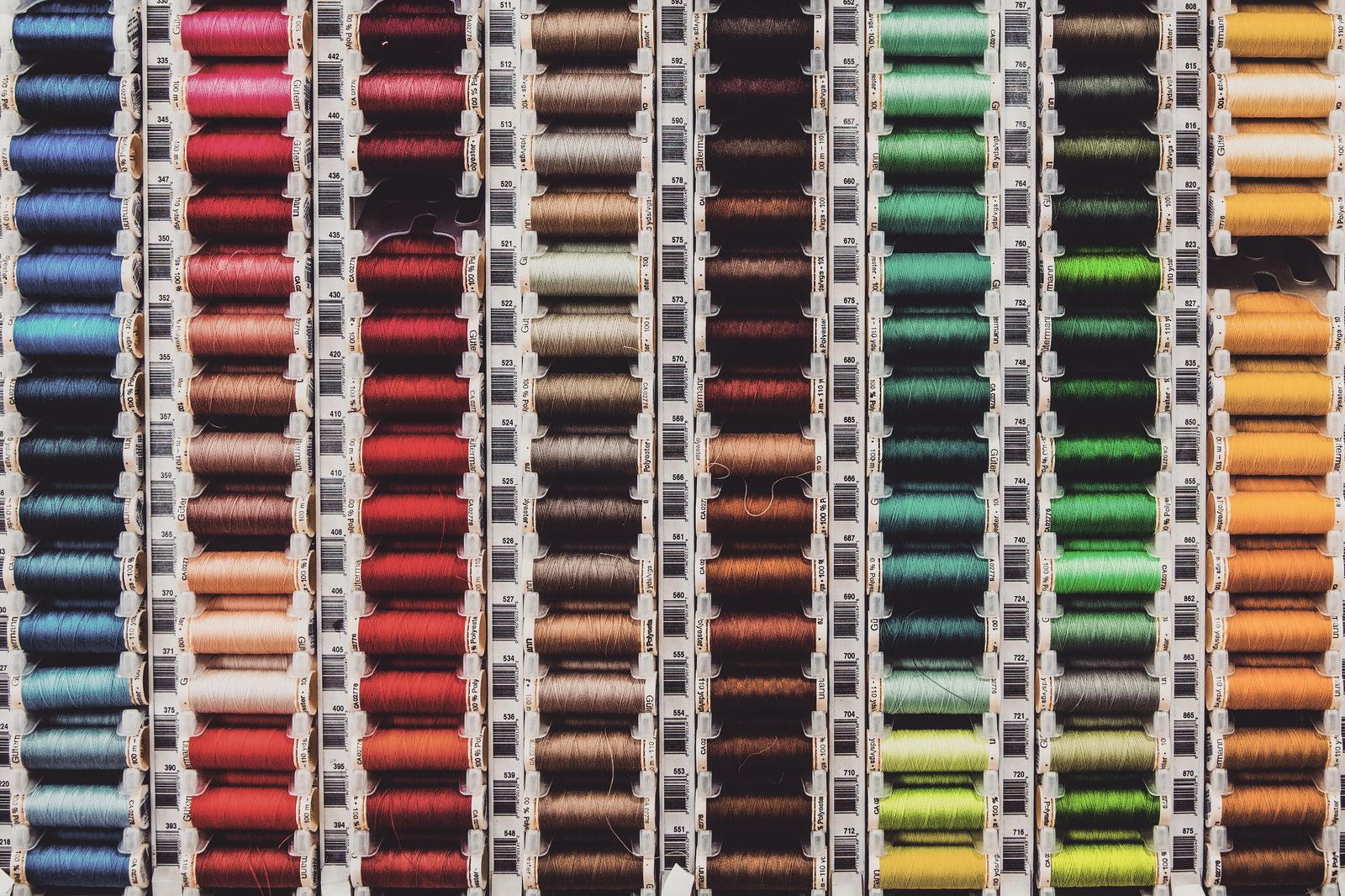
The default thread for machine embroidery is 40-weight polyester. Most designs sold on Etsy, Embroidery Library, and Urban Threads are digitized assuming 40wt polyester on top and 60wt bobbin thread underneath. Using a different weight changes how the design stitches out relative to what the digitizer planned.
Thread weight numbers explained
Thread weight works counterintuitively. A higher number means a finer thread, not a heavier one. The weight number comes from how many meters of thread weigh one gram (or a variant of this calculation depending on the standard used). More meters per gram = thinner thread = higher number.
| Weight | Common use | Coverage per stitch |
|---|---|---|
| 30wt | Accent stitching, large fill areas | Heavy coverage |
| 40wt | Machine embroidery standard | Standard coverage |
| 50wt | General sewing, fine embroidery | Lighter coverage |
| 60wt | Embroidery bobbin thread | Very fine |
| 80wt | Heirloom hand-embroidery details | Extremely fine |
The 40wt recommendation covers essentially all digitized designs sold for home machines. When a digitizer specifies thread weight, they almost always mean 40wt. Running 30wt thread through a design built for 40wt creates more coverage than the digitizer intended, which can cause fill areas to buckle or pull.
Regular sewing thread, usually 50wt or heavier in polyester or cotton, will run through an embroidery machine if you’re in a pinch, but it shows. The digitizer built the design’s density around 40wt, so a heavier or differently finished thread doesn’t fill the same way, comes out flatter and more matte than embroidery thread’s slight sheen, and frays faster under the needle’s high-speed cycling. Fine for one emergency repair. Not something to plan a project around.
Polyester vs rayon: the practical comparison
| Property | 40wt Polyester | 40wt Rayon |
|---|---|---|
| Colorfastness (washing) | Excellent | Good, some fading over time |
| Colorfastness (UV/light) | Excellent | Moderate; can fade in direct sunlight |
| Sheen | Slight to moderate | Moderate to high |
| Strength | High | Moderate |
| Heat tolerance | High | Lower; may distort under high heat |
| Price per spool | Similar | Similar |
| Current default | Yes | Increasingly replaced by polyester |
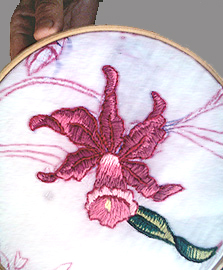
Rayon thread’s higher sheen was its main advantage. Early polyester embroidery thread had a flatter, more synthetic appearance. Modern polyester thread from brands like Madeira, Robison-Anton, and Superior Threads produces sheen levels comparable to rayon, with significantly better UV and wash durability. Rayon still has advocates among embroiderers who prefer its handle and appearance, but for most home embroidery on garments that will be laundered, polyester is the current standard recommendation.
Metallic thread
Metallic thread is a specialty category. It produces a reflective, glittery finish on logos and decorative designs. It is also consistently more difficult to work with than standard polyester:
- Metallic thread needs a topstitch or metallic-specific needle (size 12 or 14) to reduce friction and fraying through the eye.
- Running speed should be reduced to 400 to 500 spm maximum. At full 650 spm speed on an embroidery machine, metallic thread shreds through friction.
- Metallic thread requires looser top tension than standard thread (reduce by 1 to 2 numbers from your normal 40wt setting).
- Most digitized designs are not built for metallic thread. Metallic works best in outline stitching and satin stitch, not in dense fill areas where the thread tends to pile up and lose its reflective quality.
For occasional accents on a design, metallic thread is worth the setup friction. For production embroidery where reliability matters more than appearance, save the metallic for the one design element that needs it and run the rest in polyester.
Thread brands and what to expect
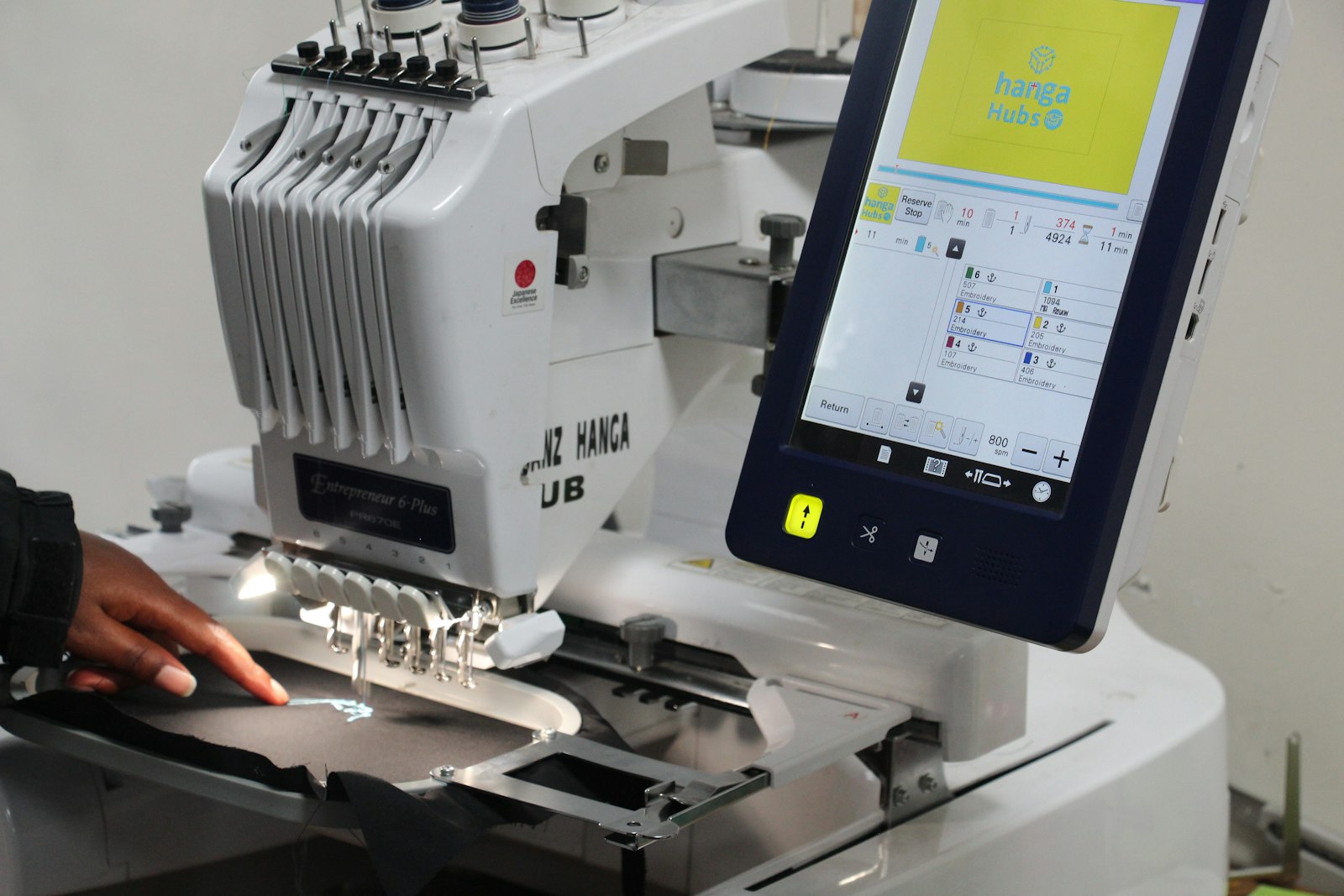
Madeira Polyneon (polyester) and Madeira Rayon 40: widely considered the benchmark. Consistent thickness across the spool, colorfast, runs reliably at full machine speed. Available in 264+ colors per line. One of the most commonly used brands in commercial embroidery.
Isacord 40 (polyester): the other benchmark brand. 400+ colors. Popular in the commercial embroidery trade for consistency. Individual spool pricing is higher than bulk sets but thread quality is consistent spool to spool.
Robison-Anton Super Brite Polyester 40: widely stocked at fabric stores and online. Good consistency. Less extensive color range than Madeira or Isacord but covers standard needs.
Sulky 40: another widely available polyester line. Works well for home use; color range is large. Occasionally reported to break more often than Madeira or Isacord on high-speed machines.
Generic and private-label thread sets: the $30 to $50 variety packs commonly sold on Amazon typically produce acceptable results for occasional embroidery. For production use or for designs with tight density, the major brands provide more consistent stitch-out results because their thread tolerance is tighter.
A basic starter set runs $30 to $80 depending on brand and covers 20 to 40 colors, plenty for most home projects. If you already know your palette, say athletic team colors or a specific client’s branding, buying 5 to 10 colors at higher volume is the better economics than working through a big variety pack you’ll barely dent.
A representative generic variety pack: 40-weight polyester, Brother-matched color numbers, the cheapest honest way to fill a thread rack.
Bobbin thread
The standard bobbin thread for machine embroidery is 60wt polyester. It is finer than top thread and sits on the underside of the design, invisible from the right side. Two common formats:
- Pre-wound bobbins: manufacturer-wound bobbins with consistent tension, ready to install. Slightly more expensive per bobbin but eliminates winding variation. Standard for embroidery production environments.
- Self-wound bobbins: wind your own from 60wt cone thread. Works fine for home use; the winding tension may vary slightly between bobbins depending on your winding speed.
60wt isn’t only for the bobbin. Some embroiderers thread it through the needle too, for fine lettering or dense overlapping fill where a standard 40wt top thread would pile up too much bulk.
Do not use 40wt top thread in the bobbin for embroidery. The extra bulk adds stiffness to the design underside and can affect top-thread tension calibration. 60wt bobbin thread keeps the bobbin side flat.
The finer underside thread every embroidery design needs. Pre-wound saves the winding step; cone thread is cheaper per use.
Thread storage
Thread degrades over time from UV exposure, humidity, and oxidation. Practical storage:
- Store thread away from direct sunlight. UV degrades dye stability and weakens fiber over time.
- Sealed containers or drawers reduce ambient humidity exposure. Humidity weakens polyester thread more slowly than rayon, but both are affected.
- Old thread (5+ years in storage) may break more easily and lose color vibrancy. If you have old thread and stitch quality is inconsistent, try fresh thread before adjusting tension.
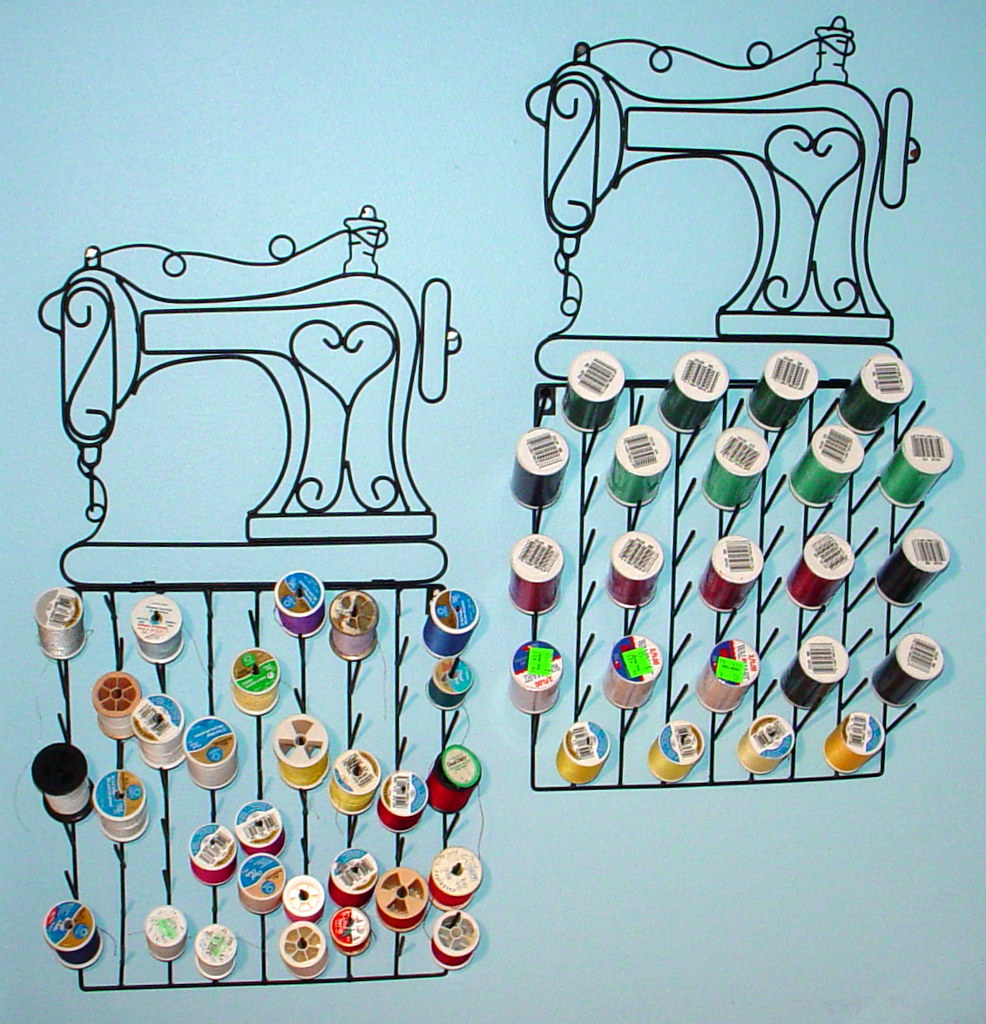
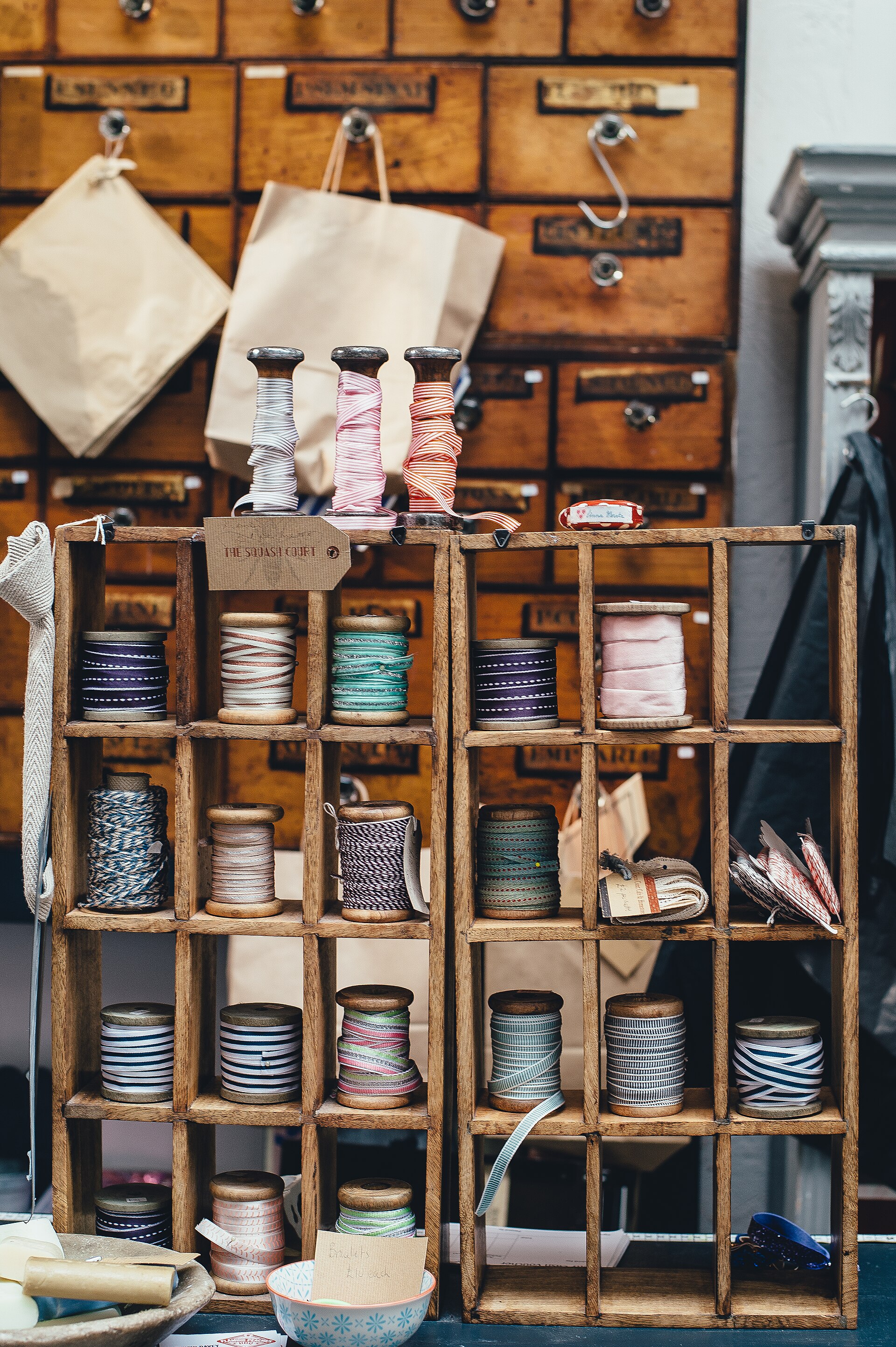
Keeps a growing color palette out of sunlight and off a cluttered table, which is most of what this storage section is asking for.
Pairing thread with stabilizer
Thread choice and stabilizer choice interact. Dense fill designs on lightweight fabric need firm cutaway backing to support the thread weight. If you find threads pulling through the fabric or designs distorting during stitching, the stabilizer may need to be heavier, not the thread. Thread weight changes should be a last adjustment, not the first.
For standard machine embroidery on cotton, woven fabric, and knit: 40wt polyester top thread, 60wt bobbin, appropriate stabilizer for the fabric type. From that baseline, adjust based on the specific design and fabric behavior.