Guides 7 min read
Machine Needles Guide: Type, Size, and When to Change
Universal, ballpoint, stretch, and quilting needles each behave differently. The wrong one causes skipped stitches and breaks. Type, size, and change schedule.
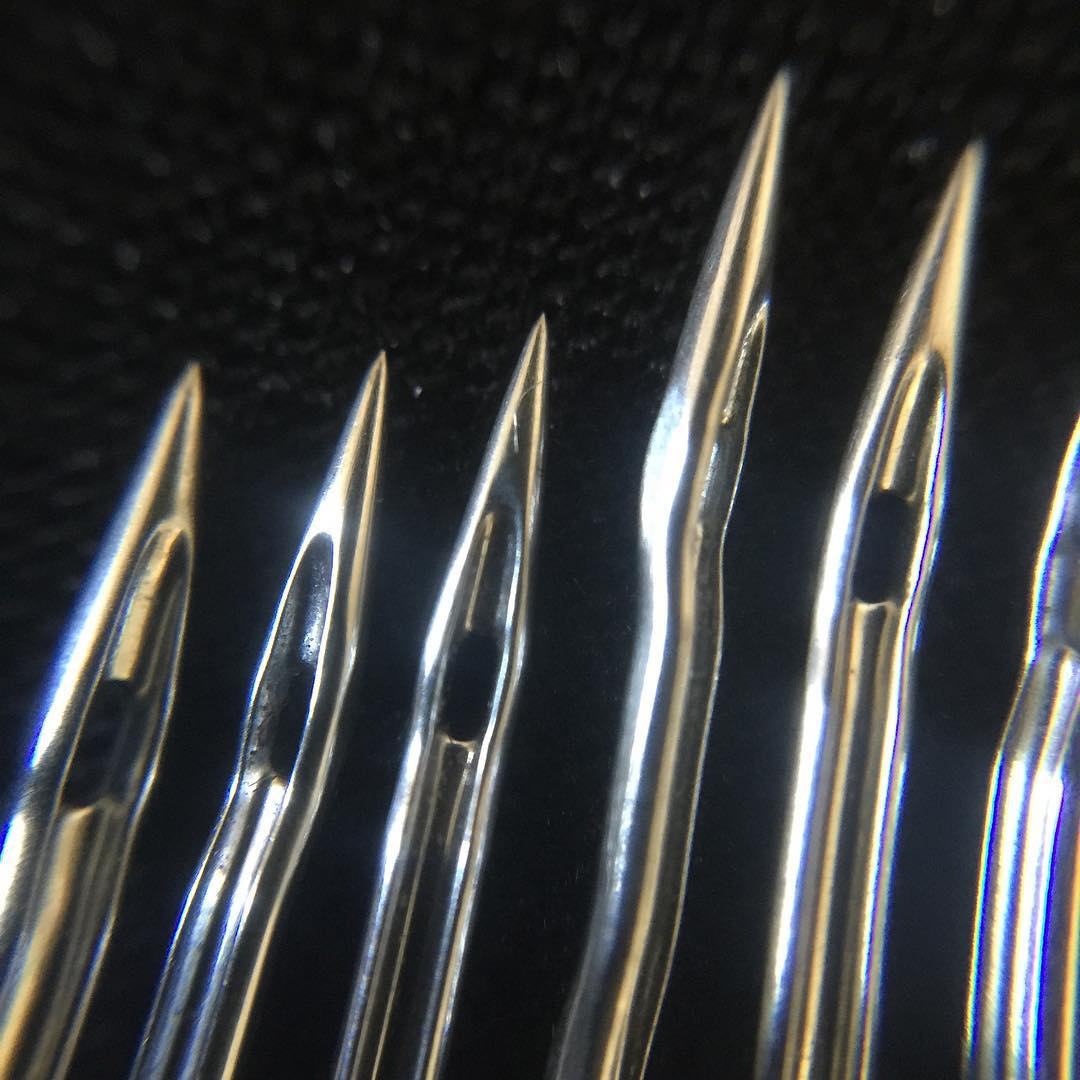
The needle type determines the point shape and how it enters the fabric. The needle size determines the shaft diameter and eye size, which affects how much hole the needle leaves and how well the thread feeds. Using the wrong type causes skipped stitches. Using the wrong size causes thread breaks or fabric damage. Both problems look like tension issues until the needle is the first thing you change.
Needle systems: home machine vs serger
The shank of a sewing machine needle (the thick upper section that sits in the clamp) varies by machine type:
- 130/705H (also called 15x1): The standard for virtually all home sewing and embroidery machines. Brother, Janome, Singer, Bernina, Pfaff, and Baby Lock all use this system. Any needle packaged for “home sewing machines” or “all brands” in this system fits.
- HAx1: The standard for home sergers, including the Brother 1034D, Juki MO-654DE, and most home overlockers. HAx1 and 130/705H share the same screw diameter, which is why they look interchangeable at a glance, but they differ in needle length and position and are not interchangeable. Using 130/705H needles in a serger designed for HAx1 can damage the hook mechanism.
When buying needles: verify the system before buying. “Universal” on a needle package usually refers to the point type (see below), not compatibility across machine types.
Needle types and when to use each
| Needle type | Point shape | Best for | Avoid on |
|---|---|---|---|
| Universal | Slightly rounded | Medium-weight woven; general purpose | Fine knit, stretch |
| Ballpoint (BP) | Rounded | Knit fabric, jersey, fleece | Tightly-woven fabric |
| Stretch | Rounded, modified scarf | Highly elastic knit, lycra, spandex | Non-stretch woven |
| Sharp (Microtex) | Very fine point | Silk, chiffon, tightly-woven cotton | Knit (skips stitches) |
| Quilting | Tapered point | Multiple layers, quilting fabric, batting | Single-layer knit |
| Topstitch | Large eye, reinforced | Topstitching with heavy or metallic thread | Lightweight fabric |
| Embroidery | Slightly rounded, large eye | Machine embroidery thread (40wt polyester/rayon) | General sewing |
| Metallic | Large eye, smooth channel | Metallic embroidery thread | Standard polyester |
For machine embroidery: always use an embroidery needle (available in 75/11 and 90/14) or a topstitch/metallic needle when using metallic thread. The embroidery needle’s larger eye and modified scarf reduce friction on the thread at high speeds.
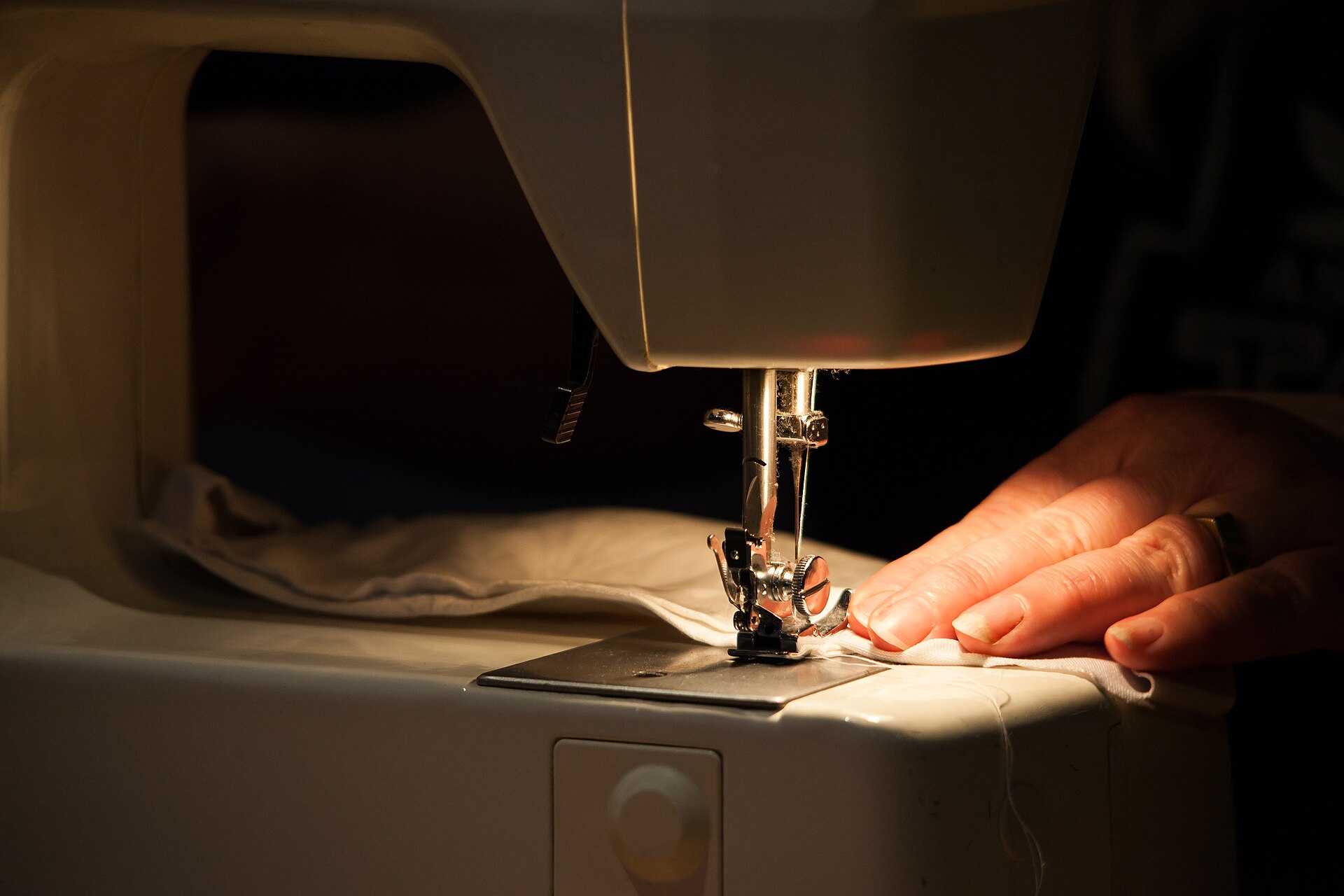
Needle sizes
The size number in the designation (75/11, 90/14, etc.) indicates the shaft diameter. Lower numbers = finer needle = smaller hole in the fabric. Higher numbers = heavier shaft = handles thicker thread and heavier fabric.
| Size | European designation | Common use |
|---|---|---|
| 9 | 65 | Very lightweight (organza, fine silk, delicate knit) |
| 11 | 75 | Standard machine embroidery; light-to-medium woven |
| 12 | 80 | All-purpose; most medium-weight fabric |
| 14 | 90 | Heavier fabric; denim; canvas; thick fleece for embroidery |
| 16 | 100 | Heavy denim, leather (with leather needle type), upholstery |
| 18 | 110 | Very heavy materials; multiple layers of denim |
For most home embroidery on standard garment fabric and quilting cotton: 75/11 embroidery needle. For denser designs on heavier fabric: 90/14. For metallic thread regardless of fabric weight: size 12 or 14 topstitch/metallic needle (the larger eye reduces shredding).
Covers the two sizes this guide actually recommends: 75/11 for standard work, 90/14 for denser designs on heavier fabric.
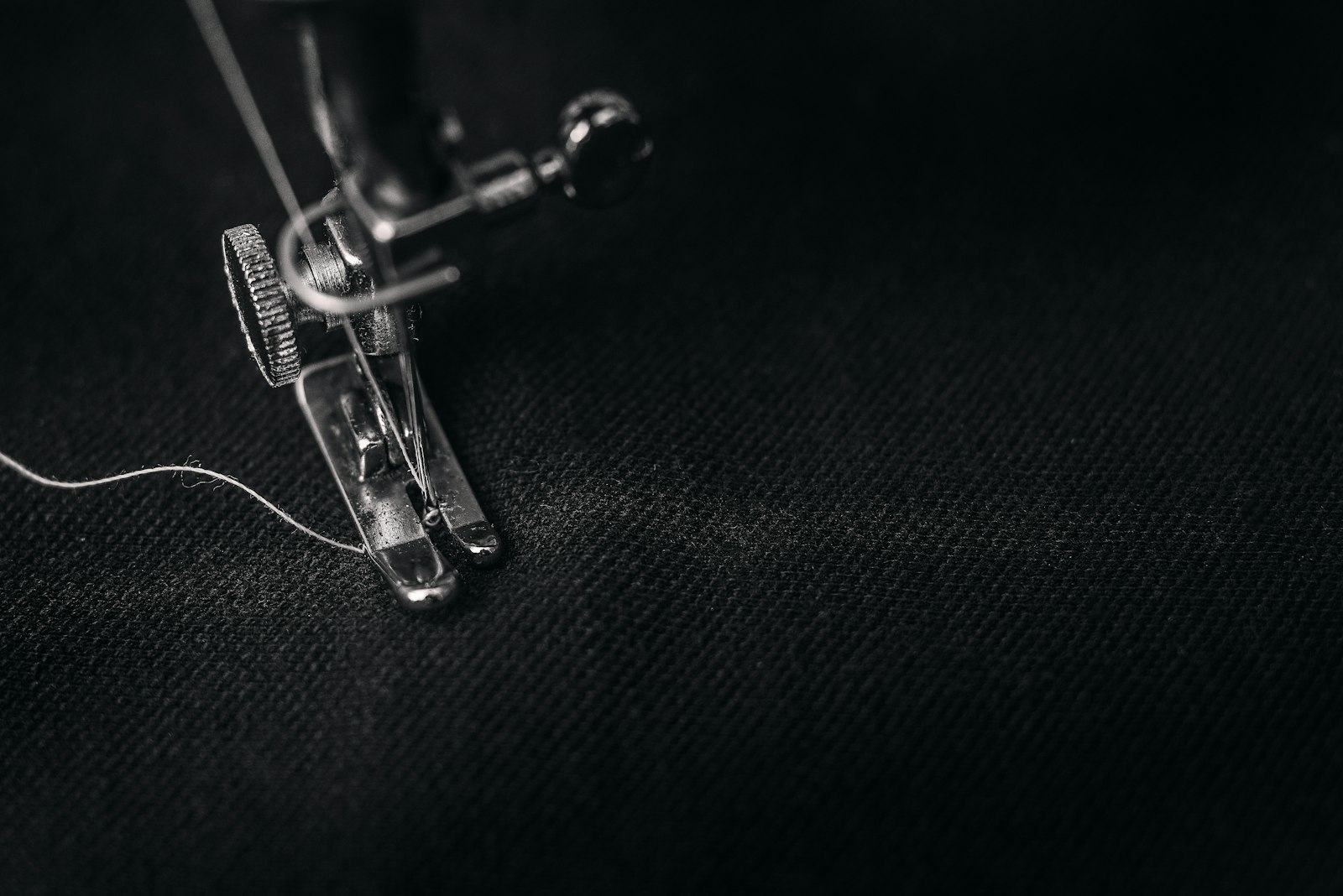
When to change the needle
Time-based:
- Every 8 to 10 hours of sewing or embroidery time. This is the preventive interval. A needle that has sewn for 10 hours at 650 spm has passed through fabric more than 390,000 times. The point dulls; the eye can develop microscopic burrs.
Symptom-based (change immediately when):
- Skipped stitches that do not resolve after re-threading
- Audible “pop” or “thud” as the needle enters fabric (indicates a burred or bent point)
- Thread fraying or breaking near the needle eye (often indicates a burr in the eye)
- Needle struck a pin, the throat plate, or any hard object during sewing
- Starting a project on expensive or irreplaceable fabric (start with a fresh needle)
- Switching to a significantly different fabric weight (a needle from light cotton may not perform well on heavy denim)
Resistance to changing needles is the most common home sewing machine mistake. A needle costs $0.50 to $1.50. An hour spent troubleshooting what turns out to be a worn needle costs considerably more.
Inserting the needle correctly
- Loosen the needle clamp screw with the machine powered off.
- Remove the old needle by pulling it straight down.
- Insert the new needle with the flat side toward the back of the needle clamp.
- Push the needle fully up into the clamp until it cannot go further. A needle that stops 1mm short of fully seated causes intermittent stitch problems.
- Tighten the needle clamp screw firmly. On most machines this is a small flathead screw above the needle.
The flat side orientation is not optional. The flat side positions the eye so the hook can intercept the thread loop at the bottom of each stitch cycle. A rotated needle misses the hook, and the result ranges from skipped stitches to a complete failure to catch the bobbin thread at all, even if tension is perfect.
Useful on the smaller embroidery needle eyes, especially 75/11, where threading by eye alone gets frustrating.
Common needle mistakes
Using a universal needle for all knit work: Universal needles work acceptably on medium knit at moderate speeds but produce more skipped stitches than ballpoint needles on fine or loose knit. The difference becomes obvious on jersey and lightweight single-knit.
Not checking needle orientation after installation: Assume the needle rotated during installation until proven otherwise. After tightening the clamp screw, visually confirm the flat side is facing back before sewing.
Using the same needle for a project that started on different fabric: A needle broken in on lightweight cotton is not ideal for the denim accent panel you added to the same project. Change needles when the fabric weight changes significantly.
Using sewing machine needles in a serger: The HAx1 system is not the same as 130/705H even though the shanks look similar. The difference in needle length causes the needle to miss the hook at the wrong point in the cycle. Use the needle system specified in your serger’s manual.
Running metallic thread through a standard embroidery needle: The metallic filament abrades against the eye wall with each high-speed stitch cycle. The result is thread shredding every 2 to 5 minutes. Use a topstitch or metallic needle (size 12 or 14, large eye with a smooth channel) for metallic thread.
A magnetic case keeps loose needles sorted by size instead of mixed in a drawer, which matters once you are carrying 75/11, 90/14, and a topstitch size at the same time.
Sorts loose needles by size instead of mixing them in a drawer, and the lid keeps a dropped needle from disappearing into carpet.
The embroidery machine maintenance guide covers needle change frequency in the context of the full maintenance schedule. The embroidery thread guide covers which thread types pair with which needle types.