Roundups 6 min read
Best Embroidery Machine: Ranked by Field Size and Cost
The SE700 covers 4x4 sewing and embroidery in one machine. The PE900 does 5x7 embroidery-only. The MC500E goes to 7.9x11. Every pick here links its full review.
The embroidery machine you need depends on one number: your maximum hoop size. The Brother SE700 covers 4x4 work and handles standard sewing too, at $579.99 list. The Brother PE900 does 5x7 embroidery-only work for projects that do not fit the SE700, at $1,179.99. The Janome Memory Craft 500E reaches 7.9 by 11 inches for large-format work at premium dealer pricing. Field size is the decision. Everything else follows from that.
Quick comparison
| Machine | Max field | Machine type | List price (June 2026) | Full review |
|---|---|---|---|---|
| Brother SE700 | 4” x 4” | Combo: sewing + embroidery | $579.99 | SE700 review |
| Brother SE600 | 4” x 4” | Combo: sewing + embroidery | Discontinued (used) | SE600 review |
| Brother PE900 | 5” x 7” | Embroidery-only | $1,179.99 | PE900 review |
| Janome MC500E | 7.9” x 11” | Embroidery-only | Dealer pricing | MC500E review |
| Brother PR680W | 8” x 12” | 6-needle commercial | Dealer pricing | PR680W review |
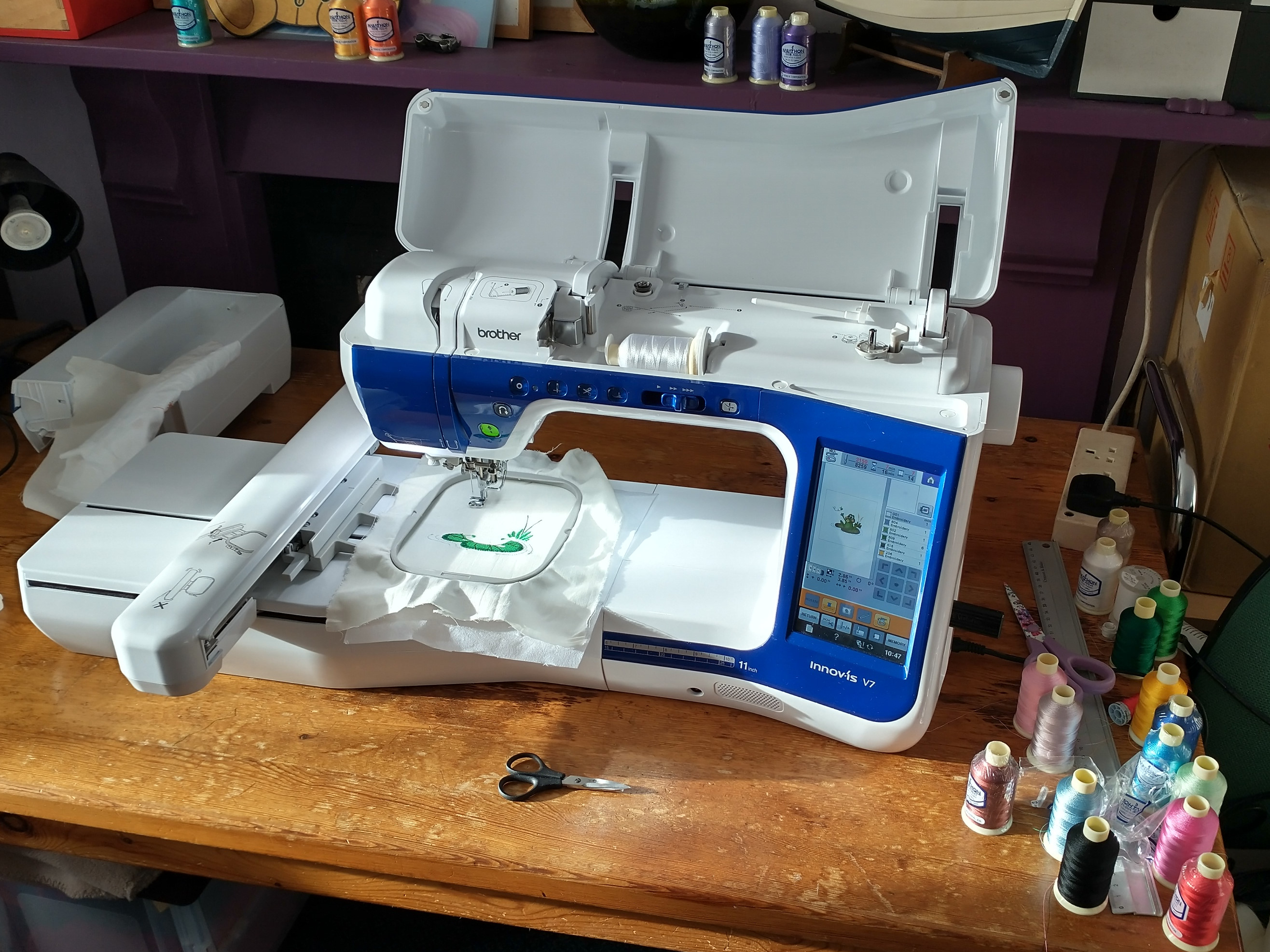
Brother SE700: the 4x4 combo pick
The SE700 is the machine to buy when you want to sew garments and embroider on the same machine and can work within a 4-inch embroidery ceiling. Specs verified on Brother USA, June 2026: 4x4 inch embroidery field, 103 built-in sewing stitches, 135 built-in embroidery designs, 710 stitches per minute, wireless LAN for design transfer, 8 presser feet included, $579.99 list.
The 4x4 field covers:
- Standard left-chest logo up to 3.5 inches wide
- Three-letter monogram in standard sizing
- Pocket and cuff accents
- Name and word embroidery
The 4x4 field does not cover:
- Towel monograms in large-script sizing (typically 4 to 6 inches tall)
- Back designs or jacket panels
- Quilt block centers larger than 4x4
The discontinued SE600 covers the same 4x4 field and is the right buy if you find a well-priced used unit with a return policy. The SE700 adds wireless transfer and more built-in designs but produces the same embroidery. Full analysis: Brother SE700 review, SE700 vs SE600, SE700 vs PE900.
Brother PE900: the 5x7 embroidery-only pick
The PE900 is the pick for buyers who want a larger embroidery field and do not need the sewing machine function. Specs verified on Brother USA, June 2026: 5x7 inch maximum embroidery field (35 square inches versus the SE700’s 16), 193 built-in designs, wireless LAN, $1,179.99 list.
The 5x7 field covers the 4x4 list above, plus:
- Large-script three-letter monogram on towels
- Baby blanket center motifs
- Multi-color jacket patches up to 5x7
- Standard quilt accent blocks
The PE900 cannot sew. It has no standard sewing stitch mode. If you sew garments in addition to embroidering, you need a separate sewing machine or a combo like the SE700.
The $600 price gap between the SE700 and PE900 is entirely about field size. If your projects fit in 4x4, the SE700 is the better value. If they consistently need more room, the PE900 is the correct machine. Full analysis: Brother PE900 review, PE900 vs Janome MC500E.
Janome Memory Craft 500E: the large-format pick
The Janome MC500E has a 7.9 by 11 inch maximum embroidery field, 160 built-in designs, and 4 hoops included. It is sold exclusively through authorized Janome dealers at premium dealer pricing, not through Amazon.
The MC500E makes sense when:
- Projects consistently exceed the 5x7 ceiling (large quilt blocks, 8-inch appliqué centers, oversized back designs)
- Build quality and Janome’s industrial feel justify the premium over Brother
- A local authorized dealer relationship matters for service and accessories
For buyers whose projects fit in 5x7, the PE900 at $1,179.99 covers the same categories at lower cost and with Amazon availability. The MC500E’s field size advantage is real only when designs actually need more than 7 inches in either dimension.
For projects that outgrow even the MC500E, Janome’s MC550E steps up to a 7.9 by 14.2 inch field. Most home embroiderers never need to go there; it’s a narrow niche above an already-niche machine.
Full analysis: Janome Memory Craft 500E review.
Brother PR680W: commercial multi-needle
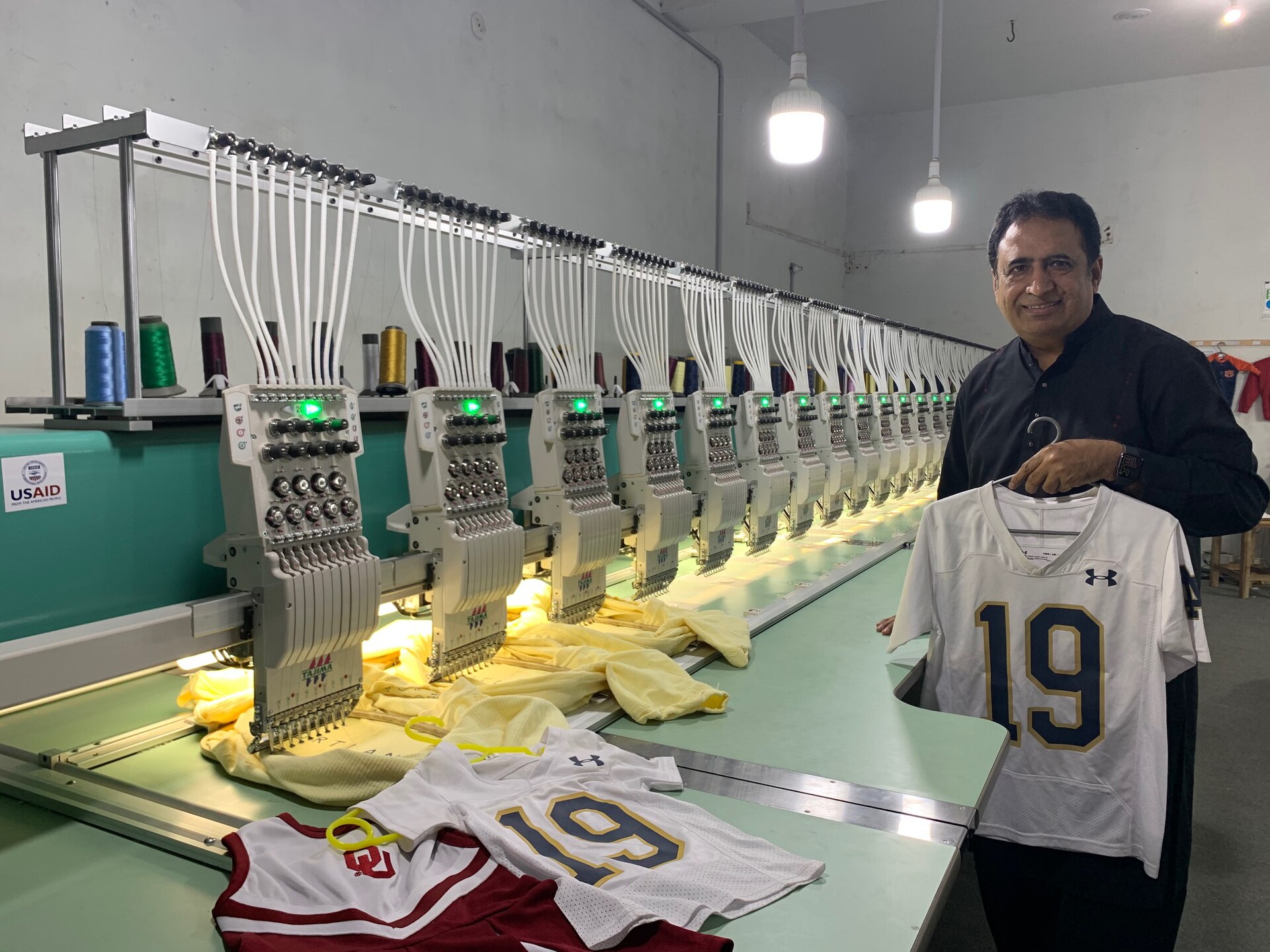
The PR680W is a 6-needle commercial embroidery machine with an 8 by 12 inch field, 83 pounds of weight, and dealer pricing. It is not a home machine in the normal sense.
The PR680W is worth considering when:
- Order volume exceeds 20 to 30 pieces per week consistently
- Designs require multiple colors running simultaneously (6 needles mean 6 threads loaded at once, no color-change stops for those colors)
- Direct hat embroidery is a regular output (the PR680W supports a cap hoop; home machines do not)
Without a cap hoop, the standard workaround on a home machine is to embroider a flat patch and sew or iron it onto the hat instead of stitching directly on the curved cap body.
For a home embroidery business starting out, the PE900 handles the first year of production at a fraction of the cost. The PR680W is the machine to consider when order volume and project complexity have outgrown single-needle production. Full analysis: Brother PR680W review.
Field size decision table
Before buying any machine, measure the largest design you realistically plan to run. That number tells you which machine to buy.
| Design type | Typical digitized size | Machine needed |
|---|---|---|
| Left-chest logo, standard | 2.5” to 3.5” wide | SE700 (4x4) |
| Three-letter monogram, small script | 2” to 3” tall | SE700 (4x4) |
| Three-letter monogram, large script | 4” to 6” tall | PE900 (5x7) |
| Baby blanket center | 5” to 6” square | PE900 (5x7) |
| Standard quilt block accent | 4” to 8” square | PE900 or MC500E |
| Large-scale back design | 8”x10” or larger | MC500E |
| Direct cap embroidery | Curved frame required | PR680W with cap hoop |
Field size decisions covered in detail in the embroidery hoop sizes guide. Digitizing software that handles design splitting (for when you need a 6x8 design on a 5x7 machine) is covered in the embroidery digitizing software guide.
Ongoing consumables cost
Every machine on this list uses the same consumables: 40wt embroidery thread, 60wt bobbin thread, and cutaway stabilizer for most projects. At a light hobby pace of 8 small designs per month:
- Stabilizer: $3 to $5 per month
- Bobbin thread: $2 to $4 per month
- Embroidery thread (replacing colors as depleted): $5 to $15 per month
Total: $10 to $25 per month in consumables. The machine you buy does not change this number.
The bobbin-side consumable every machine on this list burns through monthly, regardless of which one you buy.
The embroidery thread guide covers which thread brands run reliably at home machine speeds. The stabilizer guide covers which backing type to use for each fabric category.