Roundups 6 min read
Best Serger: By Buyer Type, with Full Cost Breakdown
The right serger depends on coverstitch, how seriously you sew, and budget. Three picks by buyer type, with review links and the real cost of serging.
The serger decision breaks into two questions: Do you want coverstitch capability in the same machine? And how seriously will you use it? Those two answers point to one of three machines. Every pick links to its full review.
Serger and overlocker are the same machine, just different regional names. Serger is the American term; overlocker is what shows up in UK, Australian, and European sewing forums and spec sheets. Both describe a machine that trims the fabric edge and wraps thread around it in one pass, using needles and loopers together.
The three buyer types
| Buyer type | Machine | Price (June 2026) | Full review |
|---|---|---|---|
| First serger, budget-conscious | Brother ST4031HD | $429.99 | 1034D / ST4031HD review |
| Buy-once, serious home sewist | Juki MO-654DE | $549 to $649 | Juki MO-654DE review |
| Overlock and coverstitch in one machine | Juki MO-735 | Varies | Serger vs coverstitch guide |
First serger: Brother ST4031HD
The Brother ST4031HD is the current entry-level recommendation at $429.99. It replaced the Brother 1034D as the standard first serger in the line. Specs verified on Brother USA, June 2026: 3/4-thread overlocker, heavy-duty construction, HAx1 needle system, labeled threading path.
The ST4031HD makes sense when:
- This is your first serger and you are not sure how much you will use it
- The budget ceiling is under $500
- You want a machine backed by Brother’s US support network and widely available accessories
- Your primary use case is finishing seam allowances on woven fabric or sewing knit seams
What the ST4031HD covers:
- 4-thread overlock (the standard stitch for seam finishing and knit garment construction)
- 3-thread overlock (for lighter edge finishing)
- Rolled hem configuration (2-thread, for fine fabric edges)
- Differential feed adjustment (for managing knit fabric stretch)
The discontinued Brother 1034D is the same machine at lower cost on the used market. If you find a 1034D in good condition for significantly less than $429.99, it does the same work. Full analysis: Brother 1034D review.
Buy-once: Juki MO-654DE
The Juki MO-654DE is the machine to buy if you know you will use a serger regularly and want to avoid upgrading later. Specs verified on Juki, June 2026: 2/3/4-thread overlocker, 1500 stitches per minute maximum speed, differential feed ratio 0.7 to 2.0, stitch length 1 to 4mm, $549 to $649 depending on retailer.
The MO-654DE makes sense when:
- You sew garments regularly and will use the serger on most projects
- Build quality matters (the MO-654DE is noticeably heavier and more precise in operation than budget entry machines)
- 1500 spm matters for volume work (versus typical 1000 to 1300 spm on entry-level sergers)
- You want a machine that is serviced easily and has a clear lineage of parts and support
Why the $120 to $220 premium over the ST4031HD is often worth it:
At 1500 spm, the MO-654DE sews faster and more smoothly through difficult fabrics like multiple-layer seams or thick fleece. The build precision also means stitch consistency is better across the speed range. For a sewist who serges several garments per month, the quality difference is noticeable in use.
The MO-654DE is an overlock-only machine. It has no coverstitch function. Full analysis: Juki MO-654DE review.
Coverstitch-included: Juki MO-735
The Juki MO-735 combines a 2/3/4-thread overlocker with 2-needle and 3-needle coverstitch in a single machine body. Specs verified on Juki, June 2026. Switching between overlock and coverstitch modes requires re-threading, taking approximately 5 to 10 minutes.
The MO-735 makes sense when:
- You sew knit garments regularly (T-shirts, leggings, sweatshirts) and want the professional two-needle hem
- Buying two separate machines (a serger and a dedicated coverstitch) is not practical for your space or budget
- You are willing to re-thread when switching between overlock and coverstitch modes
What the MO-735 offers that the MO-654DE does not:
The MO-654DE can serge seams and finish edges. It cannot produce the two-line stitching on the outside of a T-shirt hem. The MO-735 can do both, with a mode switch between functions. For a sewist who makes knit tops and wants professional hems without a second machine, the MO-735 covers both jobs.
The coverstitch alternative (two dedicated machines):
For sewists who switch between overlock and coverstitch frequently in the same session, the re-threading friction of a combo machine becomes a significant irritant. Two dedicated machines (a Juki MO-654DE plus a dedicated coverstitch machine like the Baby Lock Cover Wave or Janome CoverPro) eliminate the friction. The tradeoff is cost and counter space. Full context: serger vs coverstitch guide.
What sergers cannot do
Before buying, confirm your actual use case. Sergers cannot:
- Sew straight seams on woven fabric the way a sewing machine does. The overlock stitch is a finishing and joining stitch, not a structural straight seam. For blouses, trousers, and other woven garments, you still need a standard sewing machine for most seam work.
- Do a coverstitch hem. An overlocker and a coverstitch machine produce different stitches for different applications. An overlocker wraps edges; a coverstitch hems. They do not substitute for each other.
- Replace a sewing machine for buttonholes, zippers, or topstitching. None of the machines in this roundup can do buttonholes. A sewing machine remains the right tool for those tasks.
For a knit garment that needs professional seam finishing and hemming, the complete toolkit is: a sewing machine (optional but useful for darts and structural details), a serger (for seams and edge finishing), and a coverstitch machine or twin needle (for flat hemming).
Threading and accessories
All three machines use the HAx1 needle system, which is specific to sergers and not interchangeable with home sewing machine needles (130/705H). The machine-needles guide covers why these systems are not interchangeable and what happens if you use the wrong needle type.
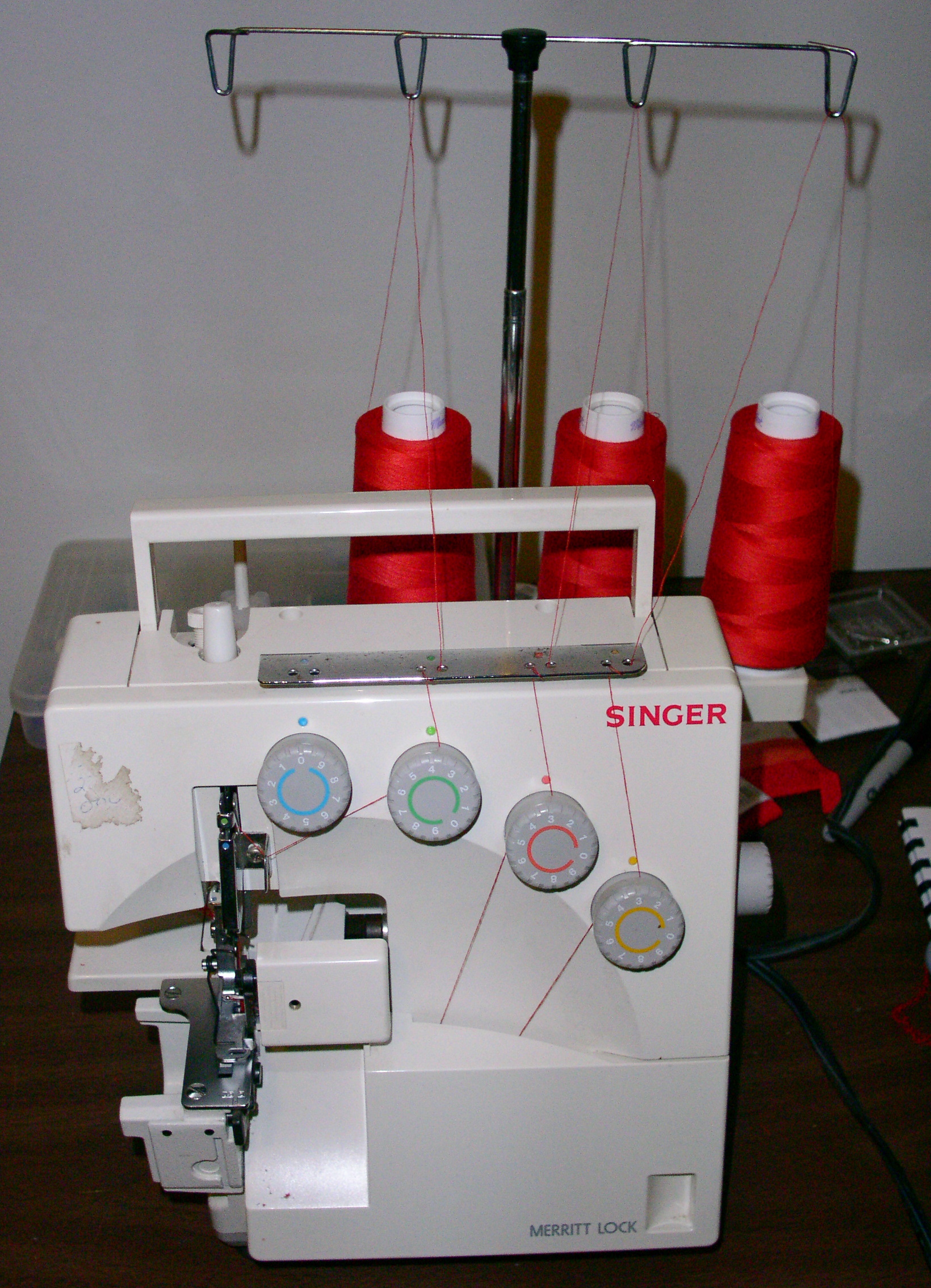
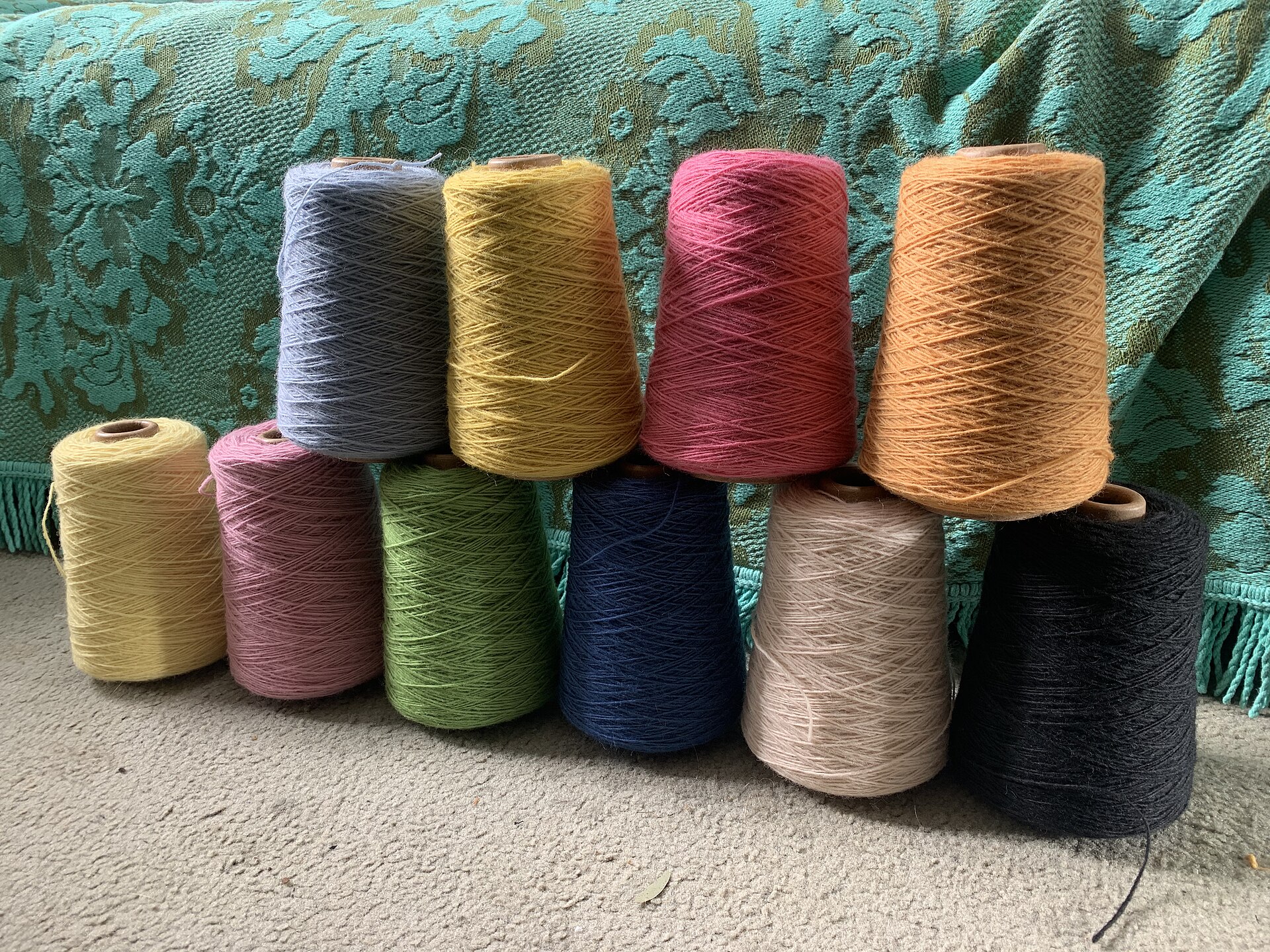
Thread requirements: large cones (1,000 to 5,000 meters) rather than standard sewing spools. A 4-thread overlocker running continuously uses thread fast. Budget for cone thread rather than purchasing small spools.
At a light pace, four garments a month, a set of four cones ($20 to $40 depending on brand) lasts several months, since a standard 4-thread setup only runs two needles plus upper and lower loopers at once. Needles need swapping more often: every 8 to 10 hours on the HAx1 system, at $0.50 to $1.50 each. Some machines also want the occasional drop of oil, though most current sergers are self-lubricating; check the manual before assuming either way.
The needle system this roundup's machines all use. Not interchangeable with home sewing machine needles (130/705H).
Large-format cones sized for a 4-thread overlocker, which burns through small spools fast.
For serger tension troubleshooting, the serger tension troubleshooting guide covers the most common thread path and tension problems on all three machines in this roundup.