Roundups 8 min read
Best Embroidery Machine for Home Business: Honest Path
Start with the Brother PE900, step up to the PR680W when order volume justifies it. The production math, the upgrade trigger, and the multi-needle question.
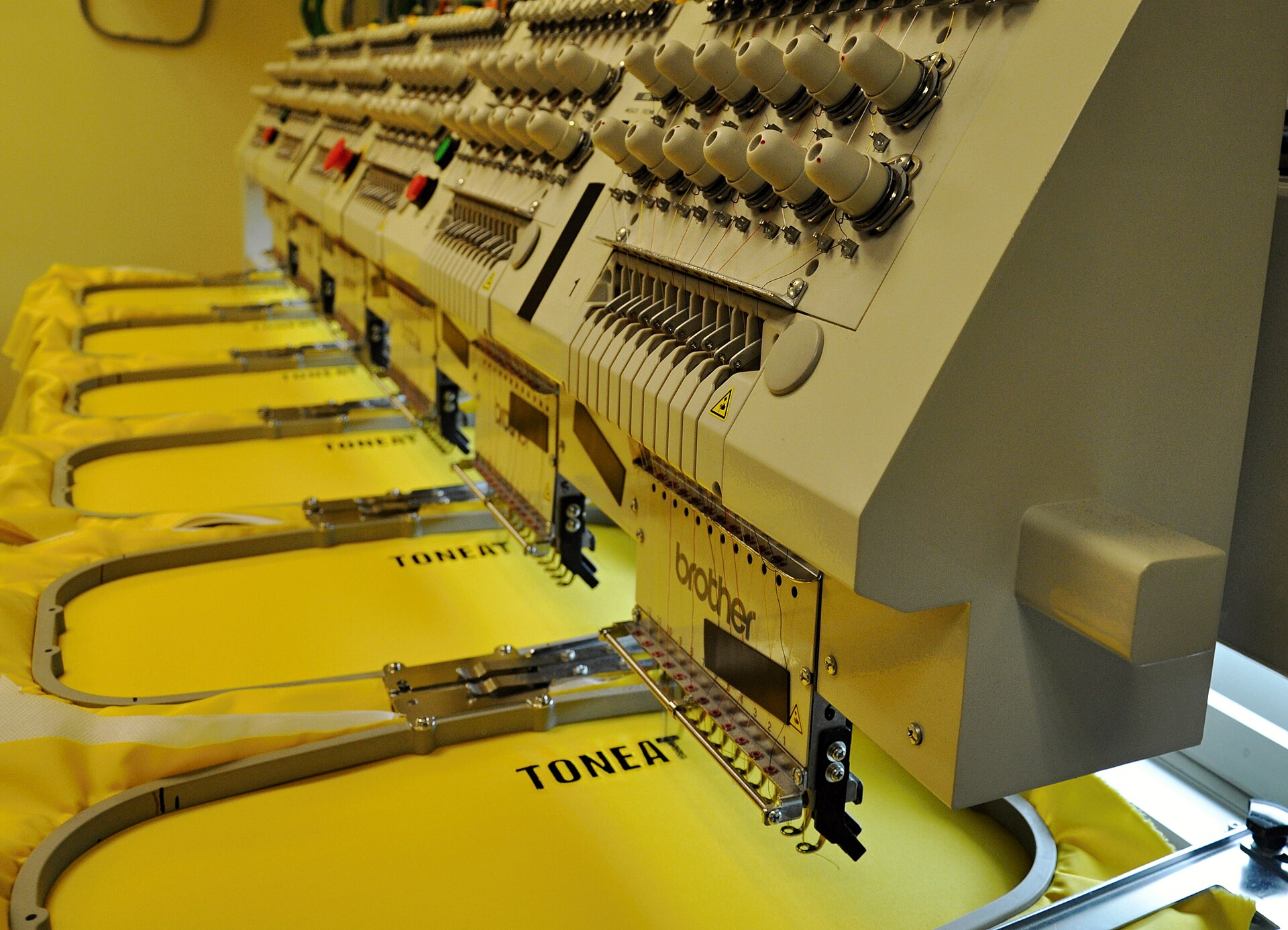
Start with the Brother PE900. It has a 5x7 embroidery field, handles the product categories most home embroidery businesses start with, and is available on Amazon at $1,179.99 without dealer involvement. Upgrade to the Brother PR680W when order volume has grown to the point where the multi-needle efficiency gain can absorb the machine investment. That is the honest path. The sections below explain what drives the upgrade timing and what to expect from each machine.
The two-machine path for a home embroidery business
| Stage | Machine | Price (June 2026) | Full review |
|---|---|---|---|
| Start | Brother PE900 | $1,179.99 | PE900 review |
| Scale | Brother PR680W | Dealer pricing | PR680W review |
| Higher production | Brother PR1055X | Dealer pricing | (see PR680W review for comparison) |
The PE900 and PR680W are not in competition. They serve different production stages. Most home embroidery businesses spend their first 12 to 24 months on a single-needle machine and move to multi-needle when they can support the investment with demonstrated revenue.
Phase 1: Start with the Brother PE900
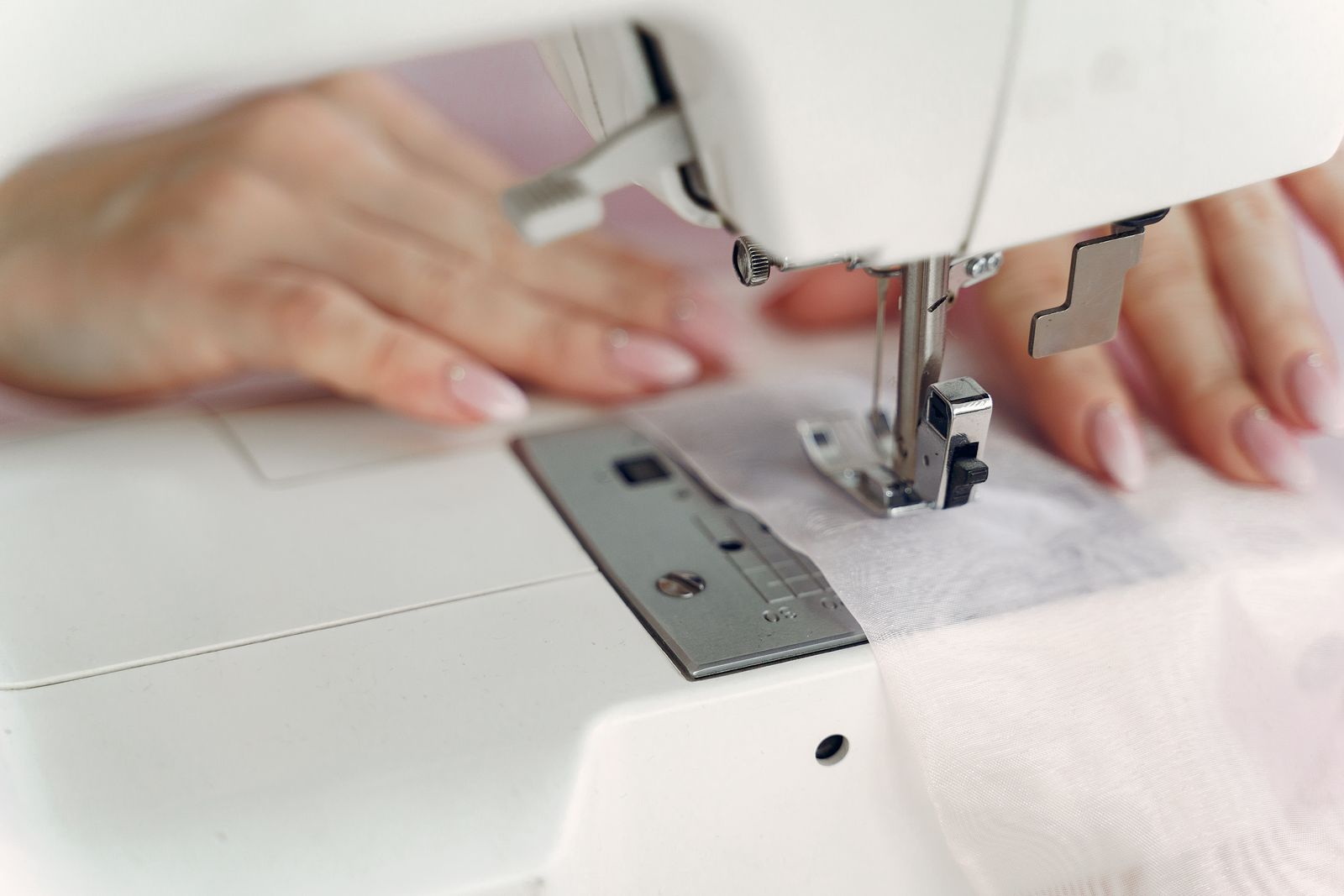
The PE900 is the right first machine for a home embroidery business for several reasons beyond its 5x7 field size.
Product categories covered from day one:
- Left-chest logo embroidery on polos, jackets, aprons, and workwear
- Tote bags, canvas pouches, and flat items up to 5x7
- Towels and baby items (monogrammed, name embroidery, small motifs)
- Hat embroidery via flat patch (embroider the patch on the PE900, apply to the hat)
- Baby blankets and throw pillow covers with centered designs
Cutting clean, square blanks for totes, patches, and panel pieces before hooping is its own small skill. A rotary cutter and self-healing mat cut straighter lines than scissors and hold up to repeated use at production pace.
For squaring up blanks and patch panels before hooping. A straighter, more repeatable cut than shears for production runs.
Why the PE900 over the SE700 for a business:
The SE700’s 4x4 field is a meaningful constraint for production work. A three-letter monogram in standard professional sizing typically runs 4 to 5 inches in its largest dimension. The PE900’s 5x7 field handles that comfortably; the SE700 requires resizing the design. For a business taking orders from customers who expect standard sizing, the PE900 eliminates that friction.
Honest constraints of the PE900:
The PE900 is a single-needle machine. It stops at every color change and waits for the operator to swap thread. A 5-color logo with 4 color stops takes the same total elapsed time regardless of how fast the machine stitches between stops. At low order volume, this is not a problem. At high order volume, color stops become the primary time sink per piece.
The PE900 cannot embroider directly on hats. It is an embroidery-only machine with no sewing function. And at 193 built-in designs, the design library is a starting point, not a professional design catalog. A subscription to Embroidery Library or a curated Etsy library is the practical design source for production work. The embroidery design sources guide covers this.
Full analysis: Brother PE900 review.
What drives the upgrade decision
The upgrade from a single-needle machine to a multi-needle machine is a financial decision, not a craft decision. The question is whether the throughput gain pays for the machine investment within a time frame that makes sense for your business.
Three signals that the upgrade conversation is worth having:
- Color-stop time exceeds stitch time. On a complex 6-color logo where each color stop takes 2 minutes for the thread change and trim, 4 stops add 8 minutes to a design that stitches in 12. A multi-needle machine pre-loads all 6 colors, eliminating those 4 stops.
- Consistent backlog at current capacity. If you regularly have a queue of unfilled orders and machine throughput is the constraint (not design time, not sourcing, not shipping), more production capacity will convert to more revenue.
- Hat embroidery at volume. Direct hat embroidery requires a cap hoop on a machine with sufficient arm clearance. The PR680W supports this. The PE900 does not. If a significant portion of your orders are caps and you are currently producing embroidered patches and applying them, the PR680W enables a cleaner production workflow for that category.
As a rough benchmark: once you’re consistently completing 30 to 50 orders a week on a single-needle machine and color-change stops are eating meaningful time per piece, the upgrade conversation is worth having. Below that volume, the throughput gain usually doesn’t recover the machine cost within a reasonable time frame.
Phase 2: Brother PR680W
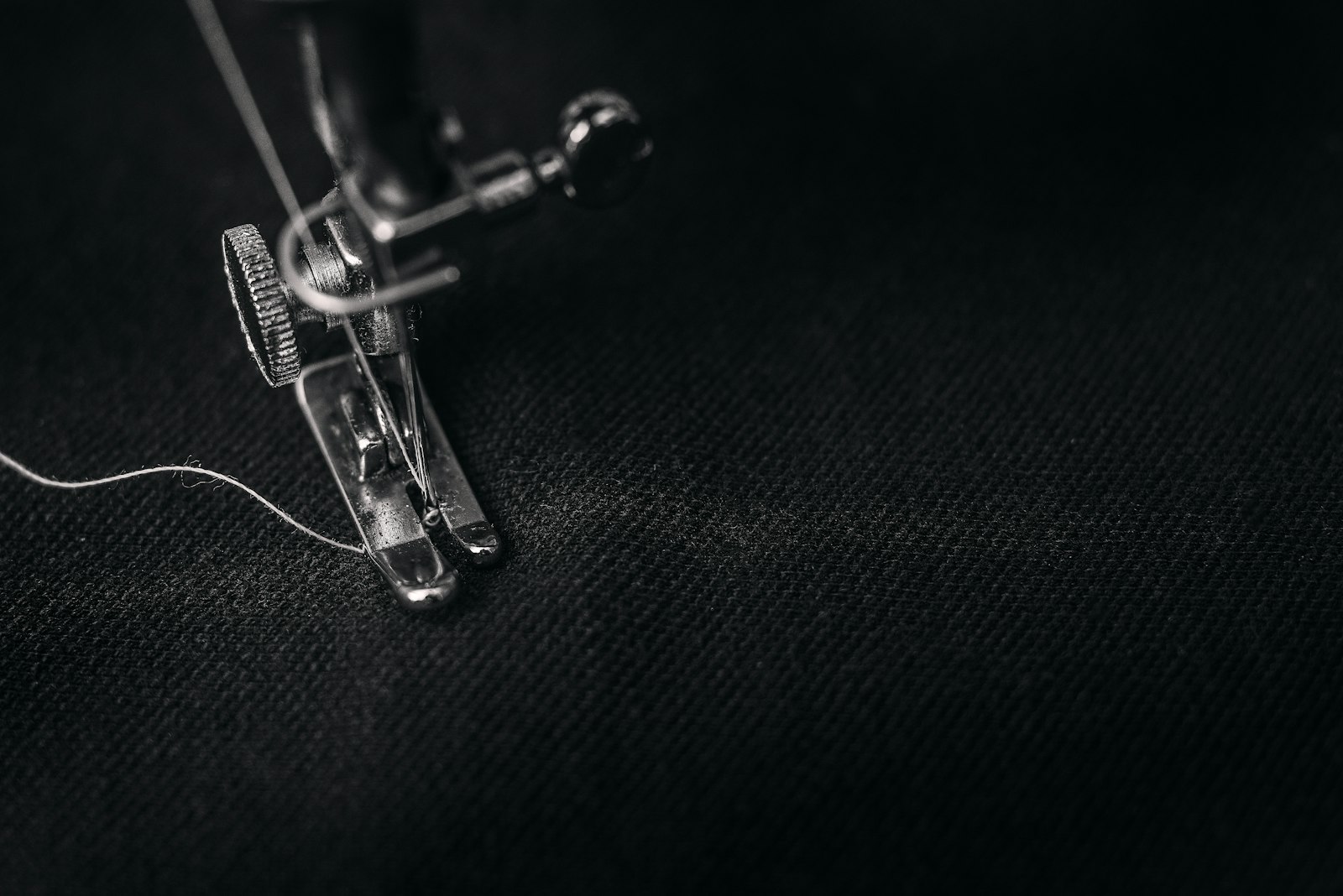
The PR680W is a 6-needle commercial embroidery machine with an 8 by 12 inch field, 1000 stitches per minute maximum speed, and 83 pounds of weight. Specs verified on Brother USA, June 2026. Sold through authorized Brother dealers.
What the PR680W changes:
- 6 needles pre-loaded. Load 6 thread colors at setup. The machine executes designs using all 6 without stopping. Only designs requiring more than 6 colors trigger a color change stop.
- 8x12 inch field. Handles large back designs, jacket panels, oversized patches, and most commercial embroidery categories in a single hooping.
- 1000 spm. Faster than most home single-needle machines. At volume, the speed difference adds up.
- Cap hoop support. With the appropriate cap hoop accessory, the PR680W embroiders directly on hats. This is a product category that the PE900 cannot support.
What the PR680W does not change:
The PR680W does not eliminate all downtime. Loading 6 needles at the start of a production run takes more time than loading 1. Threading a 6-needle machine is more involved. Designs with more than 6 colors still require thread swaps. And at 83 pounds, the PR680W stays where it is set up.
The PR680W is a dealer-only machine. You cannot buy it on Amazon. Setup, training, and service all happen through the authorized dealer network. This is a feature, not a bug, at the commercial level: you have a service relationship rather than a warranty card.
Full analysis: Brother PR680W review.
Brother PR1055X: the next step
The PR1055X is a 10-needle machine with an 8 by 14 inch field. Specs verified on Brother USA, June 2026. Ten needles mean loading 10 colors at setup, which eliminates color stops on virtually all standard commercial designs. The larger field also opens broader production categories.
The PR1055X is the right consideration when the PR680W has become the throughput constraint. For most home embroidery businesses, the PR680W is the machine at scale, not the step before the final machine.
Production math: PE900 versus PR680W
For a standard 5-color left-chest logo at 6,000 stitches:
PE900 (single-needle):
- Stitching time at average speed: approximately 10 to 12 minutes
- Color change stops (4 stops at 2 minutes each): 8 minutes
- Hoop change and positioning: 2 minutes
- Total per piece: approximately 20 to 22 minutes
- Pieces per hour: approximately 3 to 4 at sustained pace
PR680W (6-needle, pre-loaded):
- Stitching time at 1000 spm: approximately 6 to 8 minutes
- Color change stops (0 if design uses 6 or fewer colors): 0
- Hoop change: 2 minutes
- Total per piece: approximately 8 to 10 minutes
- Pieces per hour: approximately 6 to 7 at sustained pace
The PR680W produces approximately 2x the pieces per hour on a multi-color design. At 200 pieces per month (a realistic target for an established home business), that represents roughly 15 to 20 hours of machine time saved. Whether that time savings justifies the machine investment depends on your order pricing and margin.
At $25 to $50 per embroidered item, 200 pieces per month is $5,000 to $10,000 in monthly revenue. The PR680W’s dealer pricing (typically $5,000 to $12,000 depending on dealer and configuration) can be recovered within 6 to 12 months at that production level. Below that volume, the payback period extends.
Consumables at production volume
The embroidery machine maintenance guide covers machine care. At production volume, the maintenance frequency increases: needle changes every 6 to 8 hours instead of 8 to 10, more frequent bobbin area cleaning, and more regular professional servicing (every 6 to 12 months rather than every 2 to 3 years for hobby use).
Thread, stabilizer, and bobbin thread are the primary consumable costs. The embroidery thread guide covers which thread brands run reliably at commercial speeds and how to manage color inventory for production work.
Keeps a full production color inventory visible and in reach instead of buried in a bin, which matters once you are managing dozens of spools.
Design sourcing for a home embroidery business
A home embroidery business needs a reliable design library. Options:
- Commercial digitizing service: clients provide artwork, you pay a custom digitizing fee ($25 to $75 per design). This is the standard approach for custom corporate logo work.
- Embroidery Library subscription: access to a large catalog of pre-digitized designs for product types that use standard motifs (monograms, borders, themed designs).
- Purchasing a digitizing software license: for businesses with sufficient volume to justify learning Wilcom or Hatch, in-house digitizing reduces per-design costs.
For a new home embroidery business, outsourcing custom digitizing while using purchased designs for standard product categories is the practical starting point. Full design source coverage: embroidery design sources guide.