Guides 6 min read
Serger vs Coverstitch Machine: What Each One Actually Does
A serger trims and wraps the cut edge; a coverstitch makes the twin-needle hem inside athletic wear. They do different jobs. Here is when you need which.
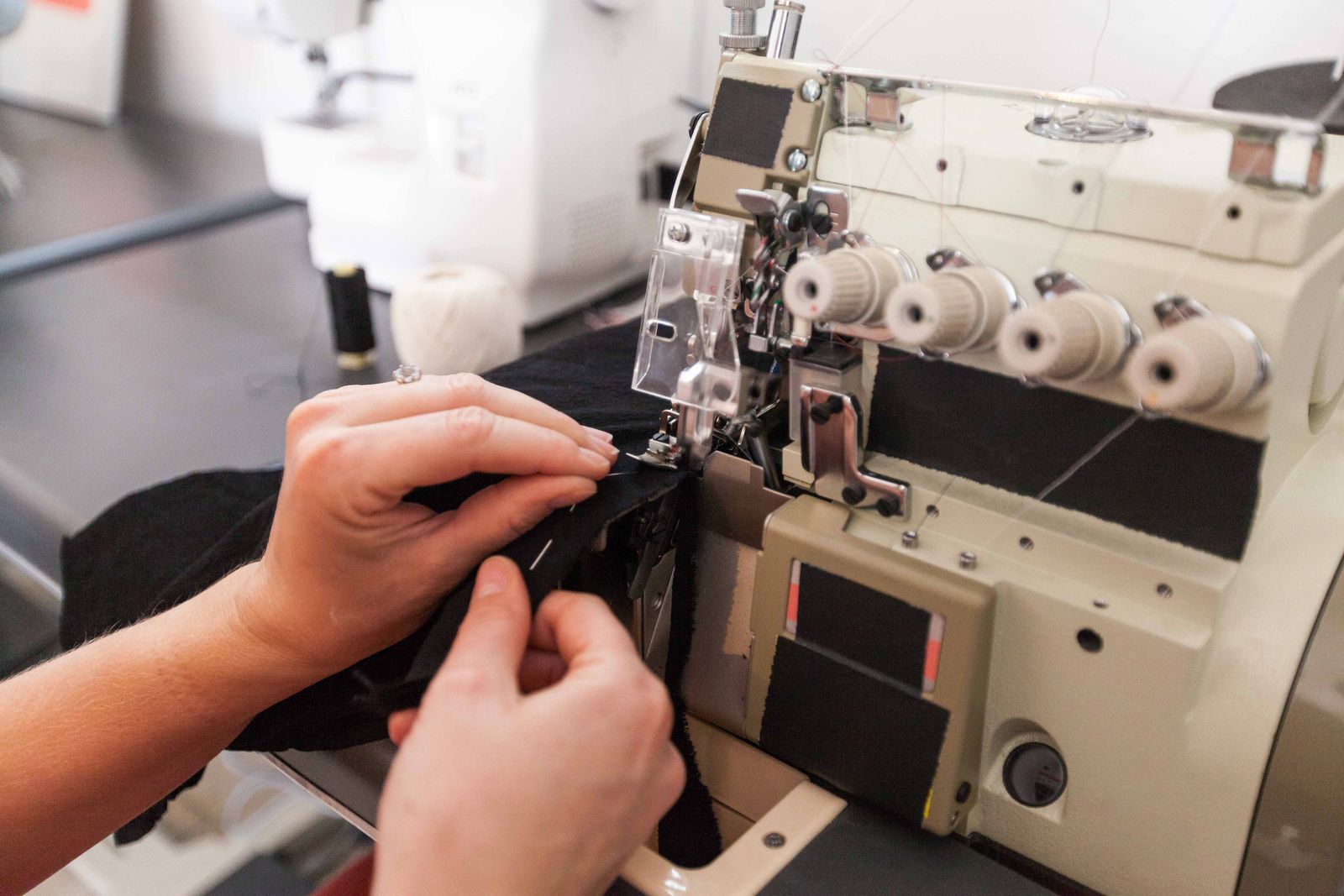
A serger and a coverstitch machine do different jobs. A serger trims the raw edge of fabric and wraps thread around it. That wrapped-thread structure is the stitch inside most commercially sewn seam allowances. A coverstitch machine produces two or three parallel rows of stitching on the right side of fabric with a chain stitch underneath. That is the hem on T-shirts, athletic shorts, and knit garments. One machine finishes seams. The other hems.
What a serger produces
A 4-thread serger stitch leaves this behind on the seam allowance: two parallel needle thread lines running along the fabric, with thread wrapping from the upper looper and lower looper around the cut fabric edge. The result is a finished, non-fraying edge.
The serger also cuts the fabric edge with an integrated blade as it sews. One pass through a serger simultaneously trims the seam allowance to a consistent width and wraps the edge with interlocking thread.
Sergers are used for:
- Finishing seam allowances on woven fabric (prevents fraying in the wash)
- Sewing knit fabric seams (the overlock stitch stretches with the fabric)
- Applying elastic to waistbands and armholes
- Rolled hems on lightweight fabric (requires a rolled hem plate or configuration, available on machines like the Juki MO-654DE that support 2-thread mode)
Sergers cannot do flat hems. They cannot produce the two-line stitch you see on the outside bottom of a T-shirt.
What a coverstitch machine produces
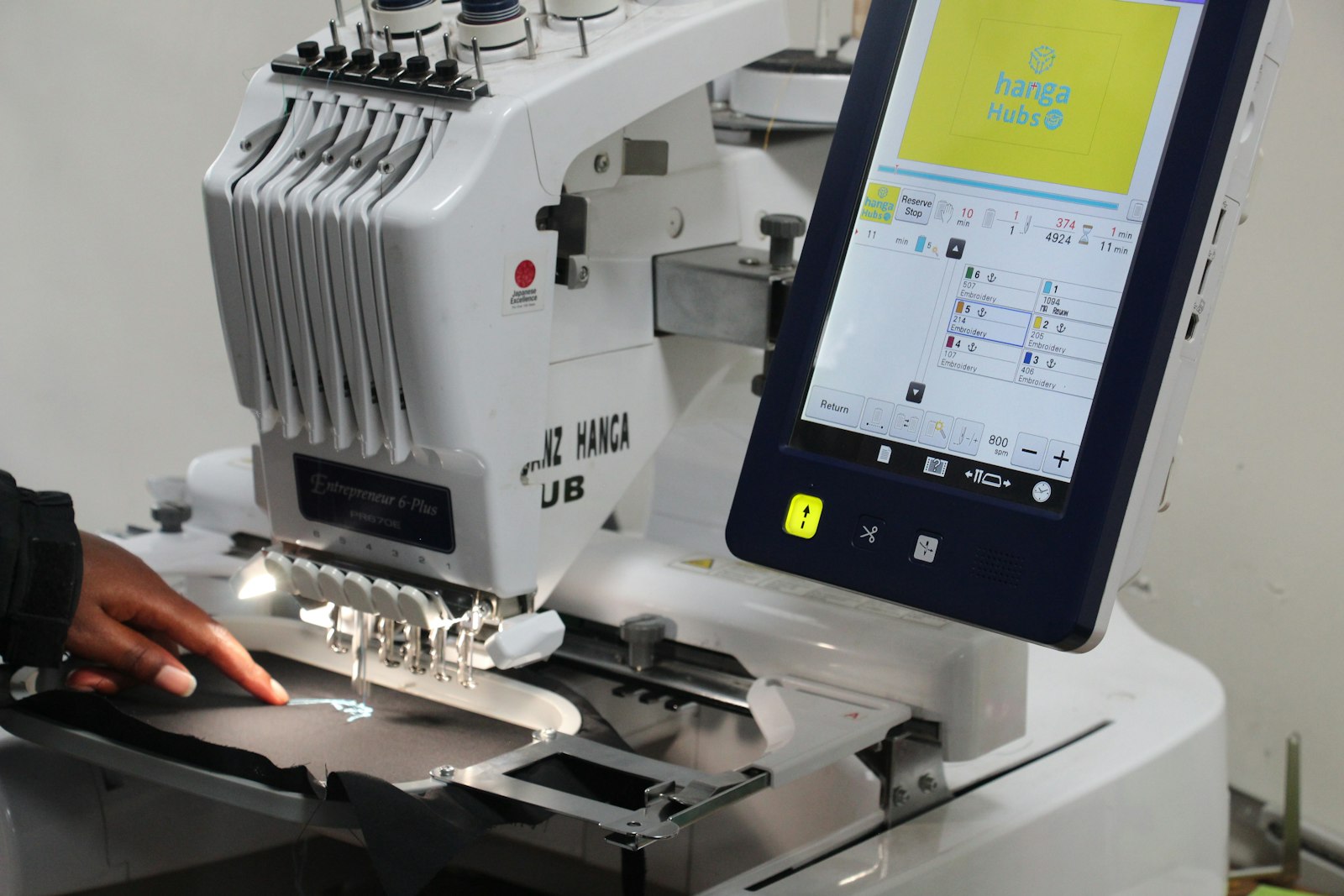
A coverstitch machine uses two or three needles and a chain stitch looper to produce parallel rows of stitching. Looking at the right side of a T-shirt hem: those two parallel lines of stitching that run around the cuff are a 2-needle coverstitch. On the wrong side of the fabric, the looper forms a chain that connects the two needle lines. A 3-needle coverstitch adds a third row, producing a wider band of visible stitching. It shows up on waistbands, cuffs, and decorative hems where the wider band is part of the design. Standard athletic wear, T-shirt sleeves and sweatshirt cuffs, sticks with the narrower 2-needle version.
The coverstitch stitch is what gives knit hems their stretch. The chain looper on the underside creates a stitch with significant built-in give, so the hem can stretch with the knit fabric without snapping threads.
Coverstitch machines do not trim the fabric edge. You fold the hem allowance up yourself (the hem is already cut to the right length and turned under), position the folded edge under the presser foot, and the machine stitches through the folded layers.
Coverstitch machines are used for:
- Hemming T-shirts, leggings, sweatshirts, and other knit garments
- Attaching ribbing to necklines and cuffs
- Topstitching on sportswear where the stitch needs to stretch
- Decorative multi-line hem stitching on waistbands
A T-shirt from start to finish: where each machine appears
This sequence shows how both machines would be used to complete a single T-shirt:
- Cut fabric pieces. No machine required. Use a rotary cutter or scissors.
- Sew shoulder seams, side seams. Use the serger in 4-thread overlock mode. The serger sews the seam and finishes the edge in one pass.
- Attach sleeves. Serger.
- Sew sleeve underarm seam. Serger.
- Hem the bottom of the shirt, sleeve cuffs, and neckline. Fold the hem allowance and secure with the coverstitch machine.
Steps 2 through 4 require a serger (or a sewing machine with a zigzag stitch). Step 5 requires a coverstitch machine to produce the professional T-shirt hem look. A sewing machine can substitute at step 5 using a twin needle or zigzag, but the result looks different from the production coverstitch.
Machines that do both
The Juki MO-735 is a combination overlock/coverstitch machine in a single body. It can switch between overlock mode and coverstitch mode. Switching requires re-threading and configuration changes. The process takes approximately 5 to 10 minutes.
For sewists who make knit garments regularly and want both functions without buying two machines, the combo approach is reasonable. The re-threading friction between modes is the main tradeoff.
For sewists who switch between serging seams and coverstitching hems frequently in the same session, two separate machines (a dedicated serger and a dedicated coverstitch) eliminate the re-threading friction entirely. The Juki MO-654DE and a dedicated coverstitch machine from Baby Lock or Janome covers both functions without requiring conversion between them.
Do you need a coverstitch machine?
| Situation | Recommendation |
|---|---|
| You sew woven garments primarily (shirts, dresses, trousers in cotton/linen) | A serger only. Woven seam finishing is the serger’s main job. Coverstitching woven hems is less common. |
| You sew knit garments (T-shirts, leggings, sweatshirts) and want professional hems | Both a serger and a coverstitch, or a combo machine like the Juki MO-735. |
| You sew knit garments and want functional hems that are not identical to commercial production | A serger plus a twin needle on your home sewing machine. The twin needle produces two parallel lines and works on standard sewing machines. It is not a true coverstitch but is a practical substitute. |
| You are new to serging and not sure what you will sew | Start with a dedicated serger. Learn the serger first. Add a coverstitch machine if you find yourself regularly hemming knit garments and wanting the professional stitch. |
Thread and needle requirements
Serger: standard serger thread, 120/2 polyester or equivalent on large cones, for both needles and both loopers. Needle type is HAx1 (home serger needle), same as the stitch plate specification in your machine manual.
Coverstitch machine: uses the same thread type (standard serger/coverstitch cones) for the looper. The needles take standard home sewing machine needles in the appropriate size for your fabric weight.
The serger tension troubleshooting guide covers the overlock stitch structure in detail, including which tension controls affect which thread path. Coverstitch machines have separate tension adjustment from sergers, though the diagnostic approach (identify which thread is out of position) is similar.
The Juki MO-654DE review and Brother 1034D review cover the two most common entry sergers. Neither includes a coverstitch function; both are dedicated overlockers.